


Golden triangle tour with Ranthambore Tiger Safari
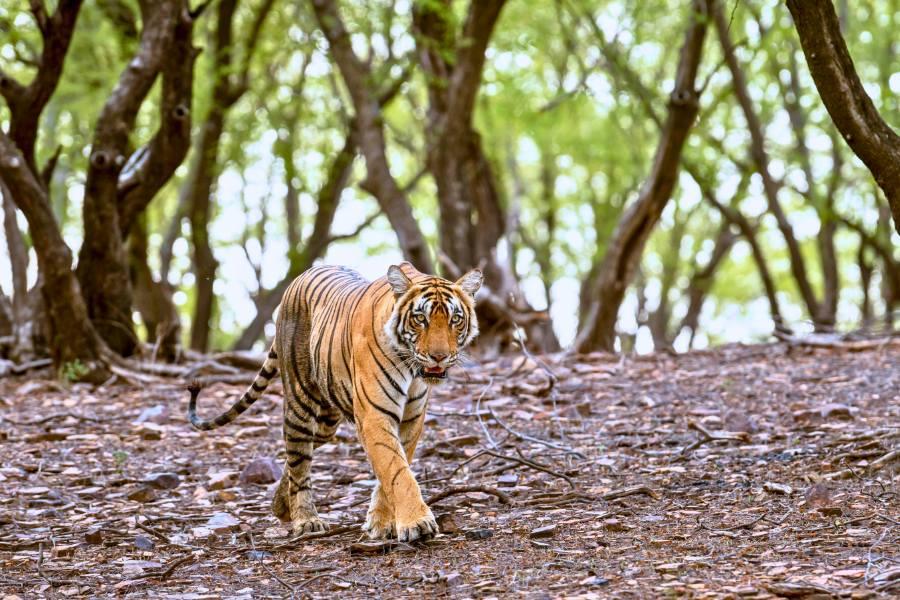
Golden Triangle Tour with Ranthambore Tiger Safari
A Golden Triangle Tour with Ranthambore Tiger Safari is an exciting way to experience some of India's most celebrated historical landmarks while adding an unforgettable wildlife adventure to your journey. The classic Golden Triangle connects Delhi, Agra, and Jaipur, three destinations known for their distinctive history, architecture, food, markets, and cultural traditions. Adding Ranthambore transforms the traditional sightseeing itinerary into a more diverse Indian holiday, combining magnificent monuments with the thrill of searching for wild tigers in their natural habitat.
Imagine beginning your journey amid the historic streets of Delhi, standing before the magnificent Taj Mahal in Agra, exploring the royal palaces and forts of Jaipur, and then heading into the forests of Ranthambore with a trained naturalist. One day may be devoted to Mughal architecture and the next to watching wildlife from an open safari vehicle. That contrast is exactly what makes this itinerary so appealing.
A well-planned Golden Triangle with Ranthambore tour can suit couples, families, photographers, first-time visitors, and travelers who want more than a conventional sightseeing holiday. The route can be customized according to the number of days available, preferred hotels, transportation style, and safari requirements.
What Is the Golden Triangle with Ranthambore Tour?
The traditional Golden Triangle covers three major Indian cities: Delhi, Agra, and Jaipur. These destinations form a roughly triangular route and are among the country's most popular introductions to North Indian culture.
Delhi provides a mixture of ancient, Mughal, colonial, and contemporary attractions. Agra is closely associated with the Taj Mahal and Mughal heritage, while Jaipur introduces travelers to Rajasthan's colorful culture, magnificent forts, elaborate palaces, and traditional markets.
Ranthambore adds an entirely different dimension. Instead of spending every day visiting monuments, you enter a protected wildlife landscape where the main attraction is the possibility of seeing Bengal tigers and other native animals.
The result is a journey that combines history, architecture, culture, photography, adventure, and wildlife in one itinerary.
Why Choose a Golden Triangle Tour with Ranthambore?
A conventional Golden Triangle itinerary is already packed with memorable experiences, but adding Ranthambore creates greater variety.
You can spend the morning admiring Mughal architecture and later find yourself surrounded by dry forest, lakes, ancient ruins, and wildlife. The change of scenery prevents the journey from becoming repetitive.
For wildlife lovers, Ranthambore is an obvious attraction. For travelers who have never been on safari, it offers a completely different experience from conventional sightseeing.
There is also an appealing rhythm to the route. Delhi introduces you to India's urban history, Agra focuses heavily on Mughal architecture, Jaipur brings Rajasthan's royal traditions, and Ranthambore provides a chance to reconnect with nature.
Instead of simply collecting photographs of famous buildings, you experience several different sides of India.
Suggested Golden Triangle Ranthambore Itinerary
A comfortable itinerary can take around 7 to 9 days, depending on how much time you want in each destination.
A sample route could look like this:
| Day | Destination | Main Experience |
|---|---|---|
| Day 1 | Delhi | Arrival and leisure |
| Day 2 | Delhi | Old and New Delhi sightseeing |
| Day 3 | Delhi – Agra | Travel to Agra and Agra sightseeing |
| Day 4 | Agra – Ranthambore | Taj Mahal and onward journey |
| Day 5 | Ranthambore | Tiger safari |
| Day 6 | Ranthambore – Jaipur | Travel to Jaipur |
| Day 7 | Jaipur | Full-day Jaipur sightseeing |
| Day 8 | Jaipur – Delhi | Return to Delhi |
| Day 9 | Departure | Airport transfer |
The itinerary can be shortened or extended. If you have limited time, one safari may be sufficient. If wildlife is a major priority, staying two nights or longer in Ranthambore provides more opportunities to explore the park.
Day 1: Arrival in Delhi
Your Golden Triangle journey normally begins in Delhi, India's capital and one of the country's most historically layered cities.
After arriving, you can transfer to your hotel and spend the rest of the day relaxing. If your flight arrives early enough, you may also choose a light sightseeing experience or explore a nearby market.
Avoid scheduling an exhausting itinerary immediately after a long international flight. Delhi is busy and energetic, and allowing yourself time to adjust can make the rest of the trip more enjoyable.
A private vehicle is particularly useful for this type of tour because it remains available throughout the journey and eliminates the need to arrange separate transportation between major destinations.
Day 2: Old and New Delhi Sightseeing
Your second day can focus on Delhi's major historical landmarks.
Begin with Old Delhi, where the Red Fort, Jama Masjid, and Chandni Chowk reveal the city's Mughal heritage.
The Red Fort provides an impressive introduction to the power and sophistication of the Mughal Empire. Nearby Jama Masjid and the busy lanes of Chandni Chowk offer a more intimate look at historic Delhi.
After lunch, continue into New Delhi.
Depending on your interests and available time, the itinerary can include India Gate, Humayun's Tomb, Qutub Minar, Lotus Temple, or other attractions.
The contrast is fascinating. Old Delhi feels dense, traditional, and energetic, while New Delhi is characterized by broad avenues, monumental buildings, gardens, and modern urban development.
Day 3: Delhi to Agra
The next stage of the journey takes you from Delhi to Agra, the city most closely associated with the Taj Mahal.
The journey can be arranged by private car or train depending on your preferences.
Once you arrive, you can explore Agra Fort and other attractions according to your schedule.
Agra Fort is particularly valuable because it provides historical context for the Taj Mahal. The fort was a major Mughal imperial center, and its architecture reveals another side of the empire's power.
You can spend the evening relaxing at your hotel before the next day's journey.
Day 4: Taj Mahal and Journey to Ranthambore
For many travelers, the highlight of the Agra portion is the Taj Mahal.
An early morning visit can provide a beautiful atmosphere, particularly for travelers interested in photography. The changing light on the white marble can make the monument appear different from one moment to the next.
After exploring the Taj Mahal and having breakfast, you can continue your journey toward Ranthambore.
The transition from Agra to Ranthambore is one of the most interesting parts of the itinerary. You leave behind one of India's greatest architectural monuments and begin moving toward a very different landscape.
Once you reach your Ranthambore accommodation, the evening can be spent relaxing and preparing for the following safari.
Ranthambore: The Wildlife Highlight
Ranthambore is famous for its association with Bengal tigers, but the park's appeal extends far beyond tigers.
The landscape includes forests, grasslands, lakes, rocky terrain, and historic ruins. Wildlife sightings can include deer, crocodiles, monkeys, birds, and other animals depending on the season and location.
The possibility of seeing a tiger is naturally one of the biggest attractions, but safari travel requires patience.
A tiger is a wild animal, not a scheduled attraction. You may have an extraordinary sighting, or you may spend hours tracking signs and listening to the forest without seeing one.
That uncertainty is part of what makes a safari exciting.
Ranthambore Tiger Safari Experience
A Ranthambore Tiger Safari typically takes place in a designated safari vehicle accompanied by trained personnel or a naturalist, depending on the safari arrangement.
The vehicle travels through designated zones while the guide looks for signs of wildlife.
Experienced guides pay attention to alarm calls, tracks, movement, fresh markings, and changes in animal behavior.
Sometimes the forest becomes completely silent before a sighting. At other times, you may hear birds calling from the trees or see deer moving through the grass.
The experience is not simply about finding a tiger. It is about learning how the ecosystem works and understanding the relationship between different species.
What Wildlife Can You See in Ranthambore?
Tigers are the star attraction, but they are far from the only animals worth watching.
Depending on the season and safari zone, visitors may encounter:
- Bengal tigers
- Leopards
- Sambar deer
- Spotted deer
- Wild boar
- Sloth bears
- Crocodiles
- Langurs
- Various bird species
- Reptiles and smaller mammals
Birdwatchers can also find Ranthambore fascinating.
Even when a tiger remains hidden, the safari can still provide numerous wildlife encounters.
This is an important mindset to have before visiting. A successful safari should not be measured only by whether a tiger appears.
The Thrill of Searching for a Tiger
There is a unique tension involved in a tiger safari.
You might be driving through a forest when your guide suddenly asks everyone to remain quiet. Perhaps a deer has issued an alarm call. The vehicle stops, engines are quiet, and everyone looks toward the trees.
Nothing happens for several minutes.
Then the forest moves.
That anticipation is part of the experience.
Even if the tiger ultimately disappears without giving you a clear view, the moment can remain one of the most exciting memories of your trip.
How Many Safaris Should You Take?
If seeing wildlife is one of your main reasons for visiting Ranthambore, consider taking more than one safari.
Wildlife sightings cannot be guaranteed, and each safari takes place under different conditions.
One drive might provide excellent tiger sightings, while another may reveal birds, deer, crocodiles, or completely different scenery.
Multiple safaris increase your opportunities to observe the park and its wildlife.
The ideal number depends on your budget, available time, and interest in wildlife.
Morning vs Afternoon Safari
Ranthambore safaris can take place during different parts of the day depending on the park's operating schedule and seasonal regulations.
Morning drives can offer pleasant temperatures and active wildlife, while afternoon drives can provide a different atmosphere as the day progresses.
Neither should be viewed as automatically superior.
Wild animals behave according to their environment rather than tourist schedules.
If your itinerary allows it, experiencing different safari periods can give you a broader understanding of the park.
Day 6: Ranthambore to Jaipur
After your wildlife experience, continue toward Jaipur, the capital of Rajasthan.
The atmosphere changes again.
Jaipur is known for its pink-colored historic architecture, royal palaces, forts, markets, jewelry, textiles, handicrafts, and distinctive Rajasthani culture.
After the wilderness of Ranthambore, arriving in Jaipur can feel like entering another world.
You can check into your hotel and spend the evening relaxing or exploring a nearby market.
Day 7: Jaipur Sightseeing
A full day in Jaipur allows you to explore some of the city's most important landmarks.
The Amber Fort is one of the major highlights. Located on a hill outside the central city, the fort combines dramatic setting with elaborate palace architecture.
You can also visit the City Palace, Hawa Mahal, Jantar Mantar, and selected markets depending on your interests.
Jaipur is also an excellent shopping destination.
Traditional textiles, jewelry, handicrafts, block-printed fabrics, decorative items, and other products make the city's markets particularly attractive.
A local guide can explain the historical and cultural significance of the major attractions.
Amber Fort
Amber Fort is one of the most visually impressive attractions in Jaipur.
The fort's courtyards, gateways, palace rooms, decorative details, and hilltop setting provide excellent photography opportunities.
The architecture reflects the artistic traditions of Rajasthan and the historical relationship between Rajput rulers and the Mughal Empire.
Allow enough time to explore rather than treating the fort as a quick photo stop.
The scale of the complex becomes clearer as you move through its different courtyards and rooms.
Hawa Mahal
The Hawa Mahal, or Palace of Winds, is one of Jaipur's most recognizable buildings.
Its distinctive façade contains numerous small windows designed to allow air to circulate through the structure.
The building is especially photogenic from the street, but exploring the surrounding area adds another layer to the experience.
The neighborhood is filled with shops and traditional businesses, making it an excellent place to combine architecture with local shopping.
City Palace and Jantar Mantar
The City Palace provides insight into Jaipur's royal history and remains one of the city's major cultural attractions.
Nearby Jantar Mantar demonstrates the scientific and astronomical interests of the historic Jaipur court.
The combination is useful because it shows that Rajasthan's royal heritage was not limited to warfare and palaces.
Architecture, administration, science, art, and commerce were all important parts of Jaipur's development.
Day 8: Jaipur to Delhi
After breakfast, begin the journey back toward Delhi.
Depending on your flight schedule, you can either spend additional time in Jaipur or travel directly to Delhi.
If your international flight departs late in the evening or the following day, consider keeping the final day flexible.
This avoids turning the end of the trip into a stressful race against traffic and airport schedules.
A private vehicle is especially convenient for this final transfer because it can take you directly to your hotel or airport.
Best Duration for the Golden Triangle with Ranthambore
A 7-day itinerary can cover the major highlights, but eight or nine days allow a more comfortable pace.
A shorter journey may require reducing the time spent in Delhi or Jaipur.
If wildlife is your main priority, add extra time in Ranthambore rather than trying to squeeze the safari into a single rushed stop.
Travelers with two weeks or more can extend the trip beyond Jaipur to destinations such as Jodhpur or Udaipur.
The ideal duration depends on whether you prioritize monuments, wildlife, shopping, relaxation, or cultural experiences.
Best Time for the Tour
The ideal travel period depends on the combination of destinations you want to experience.
Delhi, Agra, and Jaipur can be very different depending on the season, while Ranthambore's wildlife experience also varies throughout the year.
For travelers prioritizing tiger sightings, the safari season and current park operating arrangements should be checked before booking.
For travelers prioritizing comfortable sightseeing, cooler periods are generally more pleasant for walking through forts, monuments, and city streets.
Seasonal conditions can also influence photography, wildlife activity, road travel, and hotel availability.
Planning around your main priority is more useful than assuming there is one perfect travel period for everyone.
Golden Triangle with Ranthambore for Families
This itinerary can be excellent for families because it combines educational sightseeing with adventure.
Children can explore enormous forts and palaces before experiencing wildlife in a safari vehicle.
The key is to avoid overloading the schedule.
Young children may find several consecutive days of monuments tiring, so adding breaks between sightseeing sessions is worthwhile.
Ranthambore can provide a welcome change of pace. Instead of walking through another historical complex, the family spends time outdoors watching animals and learning about nature.
Golden Triangle with Ranthambore for Couples
Couples can turn this itinerary into a memorable romantic adventure.
The Taj Mahal naturally provides one of the journey's most iconic experiences, while Jaipur offers beautiful palaces, heritage hotels, and colorful markets.
Ranthambore adds excitement.
A private safari followed by a relaxing evening at a comfortable wildlife resort can create a wonderful contrast with the busy cities.
Private transportation also allows couples to control the pace of the journey.
Golden Triangle with Ranthambore for Photographers
Photographers have almost too many opportunities on this route.
Delhi provides architecture and street photography.
Agra offers the Taj Mahal, Mughal monuments, gardens, and architectural details.
Ranthambore introduces wildlife and landscape photography.
Jaipur provides colorful markets, forts, palaces, textiles, people, and urban scenes.
A longer itinerary gives photographers time to return to locations under different lighting conditions rather than trying to photograph everything during one rushed visit.
What Is Usually Included?
The exact inclusions depend on the package, but a private Golden Triangle with Ranthambore itinerary may include:
- Private air-conditioned transportation
- Airport and hotel transfers
- Accommodation
- Local sightseeing
- Professional guides in major cities
- Safari arrangements
- Driver expenses
- Parking and toll charges
- Breakfast, depending on the hotel plan
- Assistance with itinerary coordination
Safari permits, park fees, monument tickets, meals, and other services should always be checked carefully before booking because inclusions vary.
Why Private Transportation Is Useful
Private transportation makes this multi-city journey much easier.
You can travel directly between destinations without repeatedly changing vehicles.
Your luggage remains with you, and you can stop for meals or breaks when necessary.
This is particularly useful when traveling with children, senior travelers, couples, or photography equipment.
The route involves several long travel days, so comfort becomes an important part of the overall experience.
Important Safari Expectations
A tiger safari should never be treated like visiting a zoo.
There is no guarantee that you will see a tiger.
Wildlife sightings depend on numerous factors, including animal behavior, weather, vegetation, time of day, and luck.
The best approach is to appreciate the entire ecosystem.
If you see a tiger, it may become the highlight of your trip. If you do not, the forest, landscapes, birds, deer, crocodiles, and other wildlife can still make the experience worthwhile.
This mindset makes the safari more enjoyable and respectful toward wildlife.
How to Prepare for Ranthambore Safari
Wear comfortable clothing suitable for outdoor conditions.
Early morning safari drives can feel cool, while afternoon drives may be warmer.
Bring binoculars if you have them, particularly if you enjoy birdwatching.
A camera with a suitable zoom lens can be useful for wildlife photography, but avoid allowing photography to distract you from the actual experience.
Follow your guide's instructions and maintain a respectful distance from animals.
The goal is to observe wildlife without disturbing it.
Why This Tour Is Different
A standard Golden Triangle journey already offers an extraordinary cultural experience.
Adding Ranthambore changes the rhythm completely.
You move from historic cities to wilderness, from marble monuments to ancient forests, and from guided architectural tours to quiet wildlife observation.
That variety is the real strength of the itinerary.
India is too diverse to be reduced to a single travel experience. A Golden Triangle tour with Ranthambore gives you a chance to see several different sides of the country within one carefully connected journey.
Conclusion
A Golden Triangle Tour with Ranthambore Tiger Safari combines India's famous cultural landmarks with one of its most exciting wildlife experiences. Delhi introduces you to the country's historical capital, Agra provides the unforgettable Taj Mahal, Ranthambore offers the thrill of searching for wild tigers, and Jaipur reveals the royal heritage of Rajasthan.
The route is particularly appealing because every destination feels different. You can explore Mughal forts in the morning, photograph a magnificent palace another day, and sit quietly in a safari vehicle listening for an animal moving through the forest.
For the best experience, avoid rushing. Give yourself enough time for Delhi, allow a proper visit to the Taj Mahal, consider multiple safari drives if wildlife is a priority, and spend at least a full day exploring Jaipur.
Whether you are traveling as a couple, family, small group, photographer, or first-time visitor to India, this itinerary offers a powerful combination of history, culture, architecture, adventure, and wildlife.
The Golden Triangle shows you India's grand monuments. Ranthambore shows you its wild side. Together, they create a journey that is far more diverse than a conventional sightseeing holiday.
Frequently Asked Questions
1. How many days are needed for a Golden Triangle Tour with Ranthambore?
Around 7 to 9 days is a comfortable duration for Delhi, Agra, Ranthambore, and Jaipur. Travelers who want multiple safaris or a slower itinerary should consider extending the trip.
2. Is a tiger sighting guaranteed in Ranthambore?
No. Tigers are wild animals, and sightings cannot be guaranteed. Multiple safari drives can increase your opportunities, but the experience should be appreciated as wildlife observation rather than a guaranteed tiger encounter.
3. Can I do the Golden Triangle with Ranthambore by private car?
Yes. Private car travel is one of the most convenient options for this itinerary because it provides flexibility between Delhi, Agra, Ranthambore, and Jaipur.
4. Can families take a Ranthambore tiger safari?
Yes. Families can enjoy the safari, provided children meet the applicable park and safari requirements. The itinerary should include sufficient rest because the safari schedule can involve early starts and several hours outdoors.
5. Can I add Ranthambore to a Delhi, Agra and Jaipur tour?
Absolutely. Ranthambore fits naturally between Agra and Jaipur, making it one of the easiest ways to add a wildlife experience to a classic Golden Triangle tour package.

 English
 Arabic
 French
 Spanish
 Portuguese
 Deutsch
 Turkish
 Dutch
Dutch
 Italiano
 Russian
 Romaian
 Portuguese (Brazil)