


Custom Rigid Box Packaging for Premium Products
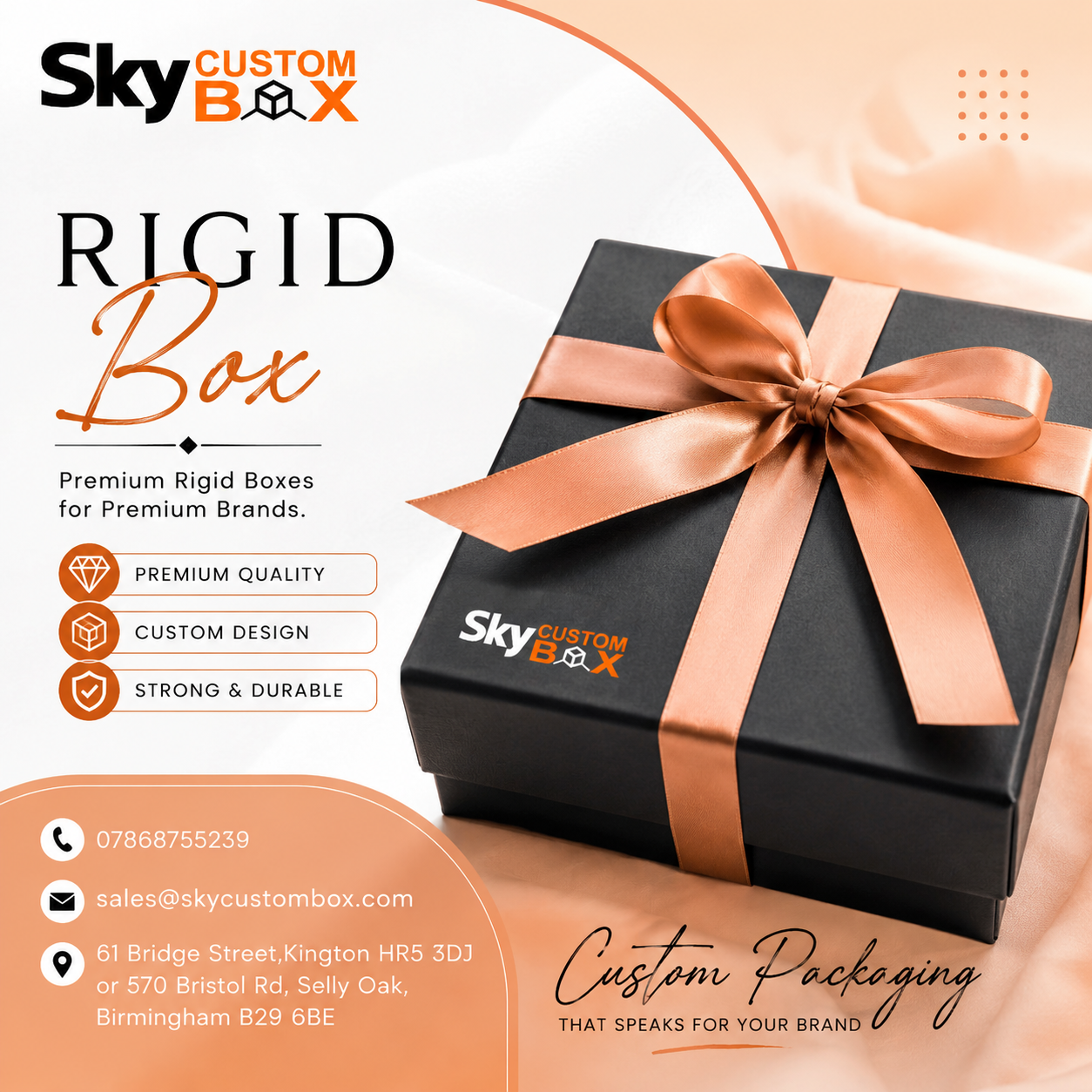
Premium products are often judged before they are ever used. Packaging plays an important role in that first impression, particularly for products positioned around quality, craftsmanship, exclusivity, or gifting. While flexible packaging and folding cartons remain practical choices for many applications, a rigid box can provide a more substantial structure and a distinctive unboxing experience.
For brands operating in retail, cosmetics, fashion, jewellery, electronics, food gifting, and other premium categories, packaging needs to balance appearance with protection, usability, sustainability, and production requirements. This is where rigid box packaging can become a practical part of a broader packaging strategy.
Custom-designed boxes allow businesses to select dimensions, materials, finishes, inserts, and structural features according to the product rather than relying solely on standard packaging formats. Understanding these choices can help businesses develop packaging that supports both product protection and customer experience.
What Is Rigid Box Packaging?
Rigid boxes are packaging structures manufactured from comparatively thick and sturdy board. Unlike conventional folding cartons, which are designed to be folded and assembled, rigid packaging typically has a more substantial construction and maintains its shape during handling.
A typical rigid box may include:
- A thick paperboard or rigid board structure
- Printed or laminated outer wrapping paper
- A separate lid or sleeve
- Internal product inserts
- Foam, card, or moulded supports
- Special finishes such as foil, embossing, or spot effects
The construction can vary considerably depending on the product and intended presentation.
For example, a jewellery box may require a compact structure with a secure internal insert, while a premium electronics package may need stronger protection and compartments for accessories. A cosmetics brand might prioritise colour accuracy, surface finishes, and a carefully designed opening experience.
The key advantage is flexibility. Custom rigid boxes can be designed around the product's dimensions and the brand's packaging objectives.
Why Premium Brands Use Custom Rigid Boxes
Packaging serves more than a protective function. It can influence how consumers perceive product quality, communicate brand identity, and affect the overall unboxing experience.
One reason businesses consider custom rigid box packaging is its structural presence. A well-constructed package can feel more substantial when handled, which may be particularly relevant for premium and gift-oriented products.
Common applications include:
Cosmetics and Beauty Products
Luxury skincare, fragrances, makeup sets, and beauty gift collections can use rigid packaging to create a coordinated presentation. Internal compartments can also prevent products from moving excessively during transportation.
Jewellery and Watches
Small premium products often benefit from packaging that combines protection with presentation. Custom inserts can hold individual items securely while maintaining a neat appearance.
Electronics and Accessories
Headphones, smart devices, specialist accessories, and technology gifts may require internal protection alongside an organised presentation. Rigid structures can accommodate trays and compartments for different components.
Fashion and Luxury Retail
Accessories such as wallets, belts, sunglasses, scarves, and footwear-related products can use structured packaging to support a premium retail experience.
Corporate and Gift Packaging
Subscription boxes, promotional gifts, seasonal collections, and corporate presentation sets can use custom packaging rigid boxes to create a more coordinated presentation across multiple products.
The appropriate structure depends on the product, distribution method, budget, and desired customer experience rather than simply the perceived premium value of the package.
Important Design Decisions for Rigid Box Packaging
Creating effective packaging involves more than adding a logo to a box. Several technical and practical decisions influence the final result.
1. Dimensions and Product Fit
The internal dimensions should accommodate the product without leaving unnecessary empty space. Excess space can increase material usage and allow the product to move during transportation.
At the same time, packaging should not be so tight that the product becomes difficult to remove or risks damage.
A useful approach is to consider:
- Product dimensions
- Protective material requirements
- Internal inserts
- Opening and closing mechanism
- Shipping conditions
- Storage requirements
2. Structural Style
Different rigid box formats serve different purposes. Common options include magnetic closure boxes, lift-off lid boxes, drawer-style boxes, book-style boxes, and two-piece constructions.
The structural format should reflect how the product will be used and presented. A magnetic closure may suit premium gifting, whereas a straightforward two-piece box may be more practical for certain retail products.
3. Surface Finishes
Finishing techniques can significantly change the appearance of packaging. Depending on the project, options may include:
- Matte or gloss lamination
- Soft-touch finishes
- Foil stamping
- Embossing and debossing
- Spot UV
- Textured papers
- Printed wrapping papers
However, additional finishes should have a clear purpose. Combining too many effects can make packaging visually complicated and may increase production costs.
4. Internal Protection
The exterior appearance is only one part of successful packaging. The internal structure should protect the product throughout storage, handling, and transportation.
Inserts can be produced using card, foam, moulded materials, or other suitable components. For fragile products, the internal design may be particularly important because attractive packaging provides little value if the product arrives damaged.
Current Trends in Rigid Box Packaging UK
Packaging expectations in the UK are increasingly influenced by sustainability, material transparency, minimalism, and consumer convenience.
One noticeable trend is the move toward simpler visual design. Instead of relying on excessive decorative elements, brands are increasingly exploring typography, texture, restrained colour palettes, and tactile finishes to communicate premium positioning.
Sustainability is another important consideration. Businesses are examining the materials used in packaging, the amount of material required, recyclability, and whether unnecessary components can be removed.
For rigid box packaging UK projects, businesses should therefore consider the complete packaging lifecycle rather than focusing only on appearance.
Useful questions include:
- Can unnecessary packaging components be removed?
- Can the package be reused?
- Are the primary materials suitable for the intended recycling stream?
- Is the packaging appropriately sized?
- Can different materials be separated more easily?
- Does the packaging provide sufficient protection without excessive material use?
These questions can help align premium presentation with more responsible packaging decisions.
Working With Rigid Box Manufacturers UK
Selecting suitable rigid box manufacturers UK involves assessing more than catalogue designs. Businesses should understand how a supplier approaches structural development, sampling, printing, finishing, quality control, and production quantities.
Before production, it is useful to prepare accurate product specifications and clarify:
- Product dimensions and weight
- Desired box structure
- Material preferences
- Printing requirements
- Surface finishes
- Internal inserts
- Expected production quantity
- Delivery requirements
- Sustainability objectives
A physical prototype or sample can be particularly useful. Digital artwork may show how graphics will look, but a physical sample allows businesses to evaluate dimensions, opening mechanisms, material thickness, colour, finish, and product fit.
Providers such as Sky Custom Box can be considered within this wider packaging supply landscape when businesses are researching custom packaging options for different retail applications.
Common Challenges and How to Address Them
Custom packaging can introduce challenges if structural and production requirements are not considered early.
Challenge: Packaging is larger than necessary.
Solution: Review product dimensions and internal protection requirements before finalising the structure.
Challenge: The box looks attractive but provides insufficient protection.
Solution: Test inserts and internal supports alongside the outer structure.
Challenge: Colours do not match expectations.
Solution: Request physical samples and confirm printing specifications before larger production runs.
Challenge: Finishing increases complexity without improving functionality.
Solution: Select finishes according to the intended brand experience and target audience.
Challenge: Sustainability goals conflict with packaging construction.
Solution: Discuss material choices, component reduction, recyclability, and end-of-life considerations during the design stage.
Early planning can reduce expensive modifications later in the production process.
Final Considerations
Rigid box packaging can offer a useful combination of structural strength, presentation, and design flexibility for premium products. Its value, however, depends on how effectively the packaging is designed around the product and distribution requirements.
Businesses considering custom rigid box packaging should look beyond appearance and evaluate the complete system: dimensions, materials, inserts, finishes, protection, sustainability, logistics, and customer usability.
Read More:
What Is Compostable Packaging? Complete UK Guide

 English
 Arabic
 French
 Spanish
 Portuguese
 Deutsch
 Turkish
 Dutch
Dutch
 Italiano
 Russian
 Romaian
 Portuguese (Brazil)