


Why White Pizza Boxes Still Work So Well for Food Businesses
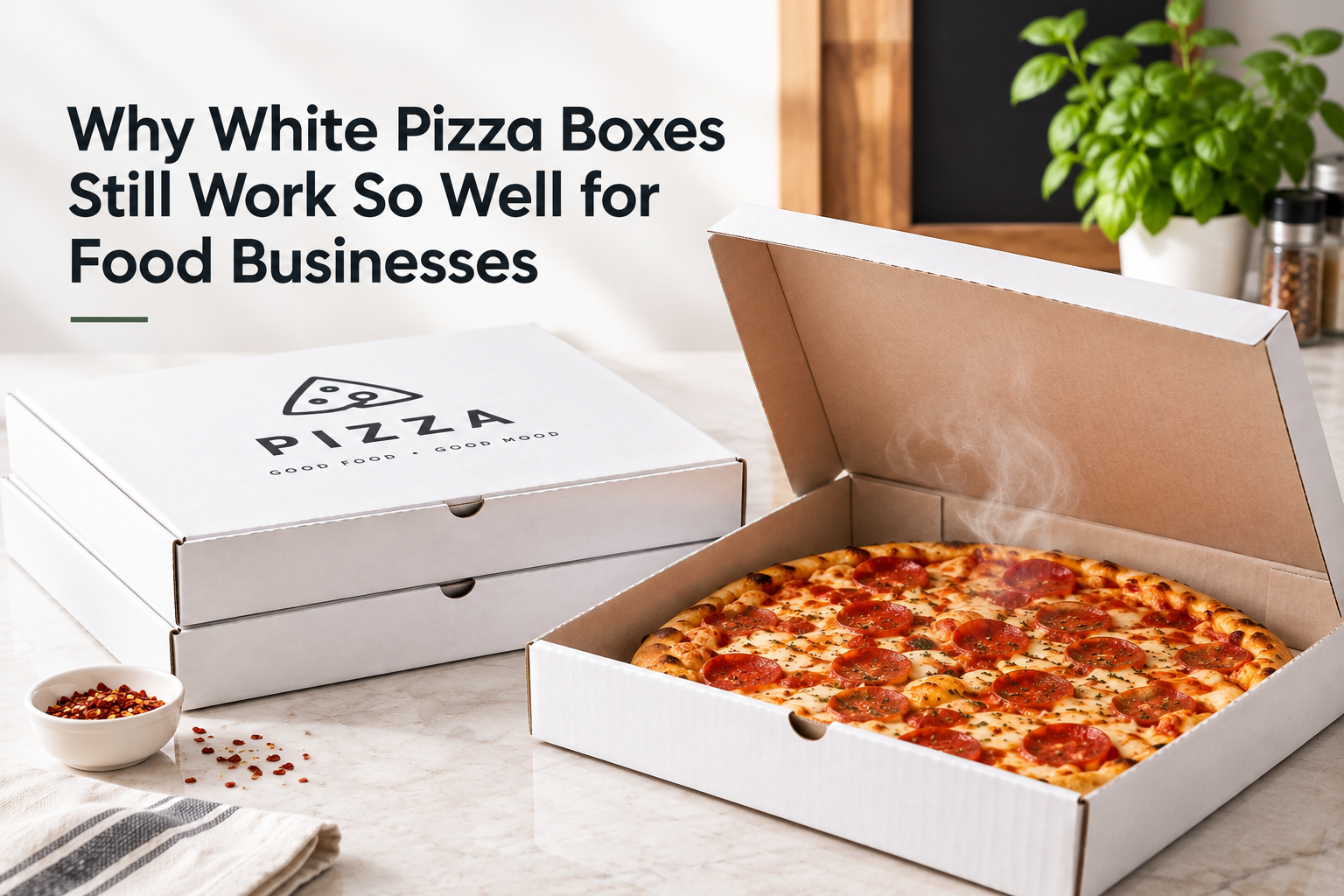
A pizza box does more than carry a pizza from one place to another. It has to protect the food, make handling easier, and still look presentable when the customer opens it. Among all the packaging styles available to restaurants, the simple white pizza boxes have remained a familiar choice for a reason. It gives businesses a clean surface to work with without making the packaging feel overly complicated.
White packaging also gives a pizza brand plenty of room to create its own look. Some businesses keep the box almost completely plain, while others use logos, patterns, messages, or small design details to make it recognizable. The important part is not how much artwork goes onto the box, but whether the packaging works for the food and the way the business actually operates.
A Clean Box Can Say a Lot
There is something naturally straightforward about a white box. It looks clean, simple, and easy to recognize, which can work well for both established restaurants and newer food businesses.
A plain surface also gives the brand more control over the overall appearance. A small logo in the center can create a completely different impression from a bold design covering the entire lid. Neither approach has to be complicated. The packaging simply needs to support the identity the restaurant wants customers to remember.
For a business that already uses a strong visual identity across its menu, storefront, website, or social media, the pizza box can become another place where those elements appear. Even a familiar logo or a short brand message can make an otherwise ordinary delivery feel connected to the restaurant.
The white background can also make printed elements easier to notice. Instead of competing with a busy base color, the artwork gets a cleaner space around it. That can be useful for restaurants that want their name or message to stand out without covering the entire package in graphics.
The Pizza Still Comes First
A good-looking box does not matter much if it does not protect the pizza properly.
The first question should always be whether the package fits the food. A pizza needs enough space around its edges to avoid unnecessary contact with the sides and lid, but too much empty space can allow it to move around during delivery.
The height of the pizza matters too. A thicker crust or heavily topped pizza may need more room than a thin pizza, even when both have the same diameter.
Restaurants should also think about how customers usually order. If most orders involve one or two standard sizes, those sizes should receive the most attention when selecting packaging. Businesses with a wider menu may need several box dimensions to keep each pizza properly supported.
This is where choosing the right pizza packaging becomes more about the actual product than simply selecting a box based on its measurements.
White Does Not Mean Basic
Some businesses avoid plain white packaging because they assume it will look too ordinary. In reality, the simplicity can become part of the design.
A white box gives a restaurant a neutral starting point. The brand can add a bold logo, a small illustration, a short phrase, or even a simple pattern without having to work around a strong background color.
It also leaves room for creativity. A restaurant could use the lid to highlight its name, add a social media handle, include a short thank-you message, or create artwork that customers immediately associate with the brand.
The key is to avoid adding things just because there is empty space available. Every printed element should have a reason to be there. When too many messages compete for attention, the customer may not know what to look at first.
Think About What Happens Inside the Box
Pizza creates a packaging challenge that businesses cannot solve through appearance alone.
Fresh pizza releases heat and steam as soon as it leaves the oven. The packaging needs to manage that environment while keeping the food protected during the journey.
Too much trapped moisture can affect the crust. At the same time, a package that does not retain enough heat may leave the customer with a meal that has cooled down before arrival.
There is no single setup that works perfectly for every restaurant because delivery distance, food preparation, pizza style, and local conditions can all affect the result.
The practical solution is to test the packaging with the actual food. Prepare a pizza normally, place it inside the box, and leave it for the amount of time a typical order spends in transit. When you open it, check the crust, toppings, moisture, and overall condition.
That simple test can tell a business more than judging an empty box ever could.
Size Matters More Than It Seems
A pizza box can be slightly too large without looking obviously wrong. The problem usually appears once the order starts moving.
If the pizza has too much room around it, the food can slide when staff carry the box or when a driver takes a turn on the road. That movement may disturb toppings or leave the pizza sitting at an angle inside the package.
A box that feels too tight creates a different problem. The lid may touch the toppings, the crust can press against the sides, or staff may struggle to close it properly.
The goal is a comfortable fit.
Restaurants can test this by using their actual pizza sizes rather than relying only on measurements from a supplier. Place the pizza inside, close the box, lift it from different angles, and move it as someone would during a normal delivery.
If the pizza stays secure without feeling squeezed, the size is doing its job.
Make It Easy for the Kitchen Staff
Packaging has to work for the people who prepare orders, too.
A restaurant may use hundreds of boxes during a busy week. If each box takes extra effort to fold, close, or stack, the small inconvenience adds up quickly.
Staff should not have to stop during a rush to figure out how a box works. The structure should make sense from the first few uses. Boxes should also stack neatly in storage so employees can grab them quickly when orders start coming in.
This becomes especially important during peak hours. When several pizzas leave the oven within a few minutes, staff need packaging that keeps up with the pace.
A simple test can help here as well. Ask someone who regularly works in the kitchen to assemble several boxes in a row. Watch where they slow down or make mistakes. Their experience can reveal practical problems that a packaging sample alone may not show.
Delivery Puts the Box Through a Different Test
The restaurant counter is a controlled environment. Delivery is not.
Once a pizza leaves the kitchen, the box may travel inside a delivery bag, sit next to other orders, or move around in a vehicle. Drivers may carry several packages at once, and customers may not open the box immediately after receiving it.
The packaging needs to handle these everyday movements without opening or losing its shape.
Stacking matters here too. A restaurant that regularly sends multiple pizzas should make sure the boxes sit securely on one another. A weak box can bend under pressure, especially when another order sits on top of it.
Businesses can recreate these conditions before ordering packaging in large quantities. Stack a few filled boxes, place them inside a delivery bag, carry them around, and check the condition afterward.
It is a basic test, but it gives a much more realistic idea of how the packaging will behave.
Keep Branding Useful, Not Overcrowded
White packaging gives a brand plenty of design freedom, but that does not mean every box needs a complicated print layout.
A restaurant should first decide what it wants customers to remember. If the name is the main priority, the logo can take the lead. If the business has a recognizable illustration or slogan, that element can support the identity without competing with everything else.
There is also value in leaving some space empty. A clean design can often look more intentional than a box filled with text from edge to edge.
The packaging should feel like part of the restaurant rather than a separate marketing project. Matching the box with other brand elements can create consistency without requiring a huge amount of artwork.
Consider Storage Before Ordering in Bulk
Packaging takes up physical space, and restaurants have to account for that.
Boxes that arrive flat usually make storage easier than fully assembled boxes, but businesses still need to consider how many they can comfortably keep on hand. Ordering too many different sizes can create unnecessary inventory problems.
The best approach depends on the menu. A restaurant that mainly sells two pizza sizes may not need a large collection of box dimensions. Another business with several pizza styles and sizes may need more flexibility.
Storage should also allow staff to reach the boxes quickly. If employees have to move other supplies every time they need a certain size, the packaging starts creating a workflow problem.
Planning storage at the same time as the packaging order can save space and reduce unnecessary handling later.
Let Real Orders Guide the Decision
It is easy to judge packaging while it sits neatly on a table. Real orders tell a different story.
Try the box with different pizzas, especially the ones that represent the busiest parts of the menu. Test a lightly topped pizza and a heavier one. Check what happens after ten minutes, twenty minutes, or whatever timeframe reflects the restaurant's normal delivery distance.
Ask the kitchen staff what they think. Ask delivery workers whether the boxes are easy to carry and stack. Look at the pizza after the trip instead of judging the package by itself.
These observations can help identify problems before the business commits to a large production run.
Simple Packaging Can Still Build Recognition
White pizza boxes may look straightforward, but that simplicity gives restaurants plenty of flexibility.
The box can protect the food, support the kitchen workflow, handle delivery, and give the brand a clean surface for its identity. Those functions do not require excessive features or an overloaded design.
What matters is how well the package fits the restaurant's actual needs. The pizza should sit securely, the box should handle heat and moisture appropriately, staff should find it easy to use, and the customer should receive an order that still looks carefully prepared.
When those details come together, a white pizza box becomes more than a plain container. It becomes a practical part of the delivery experience and another consistent place for a restaurant to show its brand.

 English
 Arabic
 Spanish
 Portuguese
 Deutsch
 Turkish
 Dutch
Dutch
 Italiano
 Russian
 Romaian
 Portuguese (Brazil)
 Greek
Greek