


Penile Implant in Pakistan
Erectile dysfunction (ED) is a common male sexual health condition in which a man has difficulty achieving or maintaining an erection firm enough for satisfactory sexual intercourse. While many men can improve erectile function with medicines, lifestyle changes, injections, vacuum devices, or other treatments, these options do not work for everyone.
For men with persistent or severe erectile dysfunction, a penile implant, also known as a penile prosthesis, may be an option. A penile implant is a medical device surgically placed inside the penis to provide the rigidity needed for sexual intercourse.
Unlike tablets or injections, a penile implant works mechanically and can provide a predictable erection when the patient wants one. Because the procedure involves surgery and is generally considered permanent, deciding to have a penile implant requires careful discussion with an experienced urologist.
This comprehensive guide explains what a penile implant is, how it works, types of penile implants, who may need one, the surgical procedure, recovery, benefits, risks, cost, and frequently asked questions.
What Is a Penile Implant?
A penile implant is a surgically implanted device used primarily to treat erectile dysfunction.
The device is placed inside the penis and allows a man to achieve penile rigidity without depending on the normal erectile process.
Penile implants are generally considered after other ED treatments have failed to provide satisfactory results, are not tolerated, or are unsuitable for the patient.
There are two main types:
- Inflatable penile implants
- Malleable or semirigid penile implants
The choice depends on the patient's anatomy, medical condition, lifestyle, expectations, manual dexterity, and the surgeon's recommendation.
Why Is a Penile Implant Needed?
Erectile dysfunction can have many causes. It may develop because of problems affecting blood vessels, nerves, hormones, medications, psychological health, or a combination of factors.
Common causes include:
- Diabetes
- High blood pressure
- Cardiovascular disease
- Nerve damage
- Prostate surgery
- Pelvic surgery
- Spinal cord or neurological conditions
- Certain medications
- Hormonal disorders
- Peyronie's disease
- Long-term health conditions
- Psychological or relationship factors
Many men with ED initially try less-invasive treatments.
These may include:
- Lifestyle modifications
- Oral ED medications
- Vacuum erection devices
- Intracavernosal injections
- Other medical treatments
When these options do not provide satisfactory erections, a penile implant may be discussed.
How Does a Penile Implant Work?
A penile implant replaces the mechanical function required to produce penile rigidity.
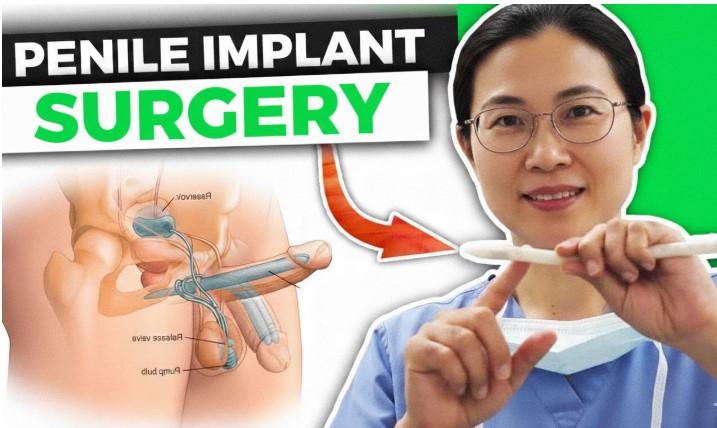
With an inflatable penile implant, two cylinders are placed inside the erectile chambers of the penis. A small pump is positioned in the scrotum, and a fluid reservoir is placed inside the body.
When the patient squeezes the pump, fluid moves into the cylinders, making the penis firm.
After intercourse, the release mechanism allows the fluid to return to the reservoir, causing the penis to become soft again.
In simple terms:
Pump → Fluid moves into cylinders → Penis becomes firm
Then:
Release mechanism → Fluid returns to reservoir → Penis becomes soft
A malleable implant works differently. It contains bendable rods that remain relatively firm but can be manually positioned.
Types of Penile Implants
1. Inflatable Penile Implant
An inflatable penile prosthesis is a hydraulic system that allows the patient to control when an erection occurs.
It usually contains three major components:
Inflatable cylinders
Two cylinders are inserted into the erectile chambers of the penis.
Pump
The pump is placed inside the scrotum and can be squeezed manually.
Reservoir
The reservoir stores the fluid used to inflate the cylinders.
How It Is Used
When an erection is desired, the patient activates the pump.
Fluid moves from the reservoir into the cylinders, creating rigidity.
After sexual activity, the release mechanism allows the fluid to return to the reservoir.
Advantages
An inflatable implant may provide:
- Adjustable erections
- On-demand function
- A more natural flaccid appearance
- Better concealment when not in use
- No need for medication immediately before intercourse
2. Malleable Penile Implant
A malleable implant uses two bendable rods positioned inside the penis.
Unlike an inflatable device, it does not have a pump or reservoir.
The rods allow the penis to be manually positioned.
For intercourse, the penis can be positioned upward.
Afterward, it can be positioned downward for concealment.
Advantages of a Malleable Implant
Potential advantages include:
- Simple operation
- No pump
- No fluid reservoir
- Fewer mechanical components
- Easy manual operation
One limitation is that the penis remains relatively firm, which may make concealment more difficult.
Inflatable vs. Malleable Penile Implant
| Feature | Inflatable | Malleable |
|---|---|---|
| Pump | Yes | No |
| Reservoir | Yes | No |
| Erection control | Yes | Manual |
| Flaccid state | Softer | Relatively firm |
| Mechanical components | More | Fewer |
| Concealment | Generally easier | May be more difficult |
| Operation | Pump mechanism | Manual positioning |
There is no single implant that is appropriate for every patient. A urologist can recommend the most suitable option after evaluating the patient's individual circumstances.
Who Is a Candidate for a Penile Implant?
Penile implant surgery may be considered for men with erectile dysfunction who:
- Have persistent ED
- Have not achieved adequate results with ED medications
- Cannot take certain ED medications
- Have not obtained satisfactory results from injections
- Do not want to rely on a vacuum erection device
- Have severe erectile dysfunction
- Have ED associated with Peyronie's disease
- Want a predictable, long-term solution
Before recommending an implant, the urologist should evaluate the patient's overall health and sexual history.
Penile Implant Evaluation
A comprehensive evaluation may include:
Medical history
The doctor reviews existing medical conditions, medications, previous surgeries and previous ED treatments.
Sexual history
The doctor may ask about:
- Erectile function
- Sexual desire
- Ejaculation
- Orgasm
- Sexual satisfaction
- Duration of ED
Physical examination
The penis and surrounding anatomy may be examined to identify curvature, scarring or other conditions.
Additional testing
Depending on the situation, blood tests or other investigations may be recommended.
The goal is to determine whether a penile implant is appropriate and whether another treatable cause of ED needs attention.
Penile Implant and Peyronie's Disease
Peyronie's disease occurs when scar tissue develops inside the penis, causing curvature and sometimes pain or erectile dysfunction.
Some men with Peyronie's disease experience both:
- Significant penile curvature
- Erectile dysfunction
In selected patients, penile implant surgery can address the erectile dysfunction, and additional surgical techniques may sometimes be used to correct significant curvature.
The treatment plan depends on the severity of the curvature, erectile function and penile anatomy.
How Is Penile Implant Surgery Performed?
Penile implant surgery is performed by a qualified urologist.
Although the exact surgical approach can vary, the procedure generally follows several stages.
Step 1: Preoperative Preparation
The patient receives instructions regarding medications, eating and drinking before surgery, hygiene, and other preparations.
The surgical team also reviews the patient's medical history and infection risk.
Step 2: Anesthesia
Appropriate anesthesia is administered before surgery.
The patient does not normally feel the surgical procedure while it is being performed.
Step 3: Incision
The surgeon makes an incision to access the erectile chambers.
Step 4: Preparing the Erectile Chambers
The surgeon carefully prepares the corpora cavernosa—the two erectile chambers inside the penis—to accommodate the implant.
Step 5: Implant Placement
For an inflatable implant, the cylinders are inserted into the erectile chambers.
The pump is placed inside the scrotum, and the fluid reservoir is positioned inside the body.
For a malleable implant, the bendable rods are positioned inside the erectile chambers.
Step 6: Device Testing
The surgeon checks the implant to ensure that it is functioning correctly and positioned appropriately.
Step 7: Closing the Incision
The incision is closed and the patient is moved to a recovery area.
The procedure commonly takes around one to two hours, although actual operating time can vary.
Is Penile Implant Surgery Painful?
The surgery itself is performed under anesthesia.
After surgery, some pain and discomfort are expected.
Patients may experience:
- Swelling
- Bruising
- Tenderness
- Pressure
- Discomfort around the incision
- Temporary discomfort while walking or sitting
Pain medication can generally be used as directed by the medical team.
The discomfort usually decreases as the surgical area heals.
Penile Implant Recovery
Recovery is different for every patient.
During the early recovery period, patients should carefully follow their surgeon's instructions.
These may include:
- Taking prescribed medications
- Keeping the surgical area clean
- Avoiding heavy lifting
- Avoiding strenuous exercise
- Avoiding sexual activity until cleared
- Attending follow-up appointments
- Learning how to operate the implant
The doctor may gradually allow normal physical activity as healing progresses.
How Long Does Penile Implant Recovery Take?
Initial healing occurs over several weeks.
Many men can gradually return to normal daily activities during the recovery period, but complete recovery takes longer.
Sexual activity is generally postponed until the surgical site has healed and the doctor has confirmed that it is safe.
A common timeframe is approximately four to six weeks, although the actual recommendation depends on the patient's healing and surgical circumstances.
When Can the Penile Implant Be Used?
An inflatable penile implant should not normally be activated for sexual intercourse immediately after surgery.
The device needs time to heal into its proper position.
During a follow-up appointment, the urologist can demonstrate how to operate the pump and explain when sexual activity can safely resume.
Following these instructions is important for reducing the risk of complications.
Benefits of Penile Implant Surgery
A penile implant may provide several benefits for appropriately selected patients.
Predictable Erectile Function
The implant can provide a dependable method of obtaining penile rigidity.
On-Demand Erections
With an inflatable implant, the patient can generally activate the device when an erection is desired.
No Need for ED Pills
Once the implant is functioning properly, the patient does not need to rely on oral ED medication to create the implant-assisted erection.
Long-Term Solution
A penile prosthesis is designed for long-term use.
Greater Spontaneity
Because the device is already implanted, sexual activity does not necessarily require taking medication beforehand.
Treatment After Other Therapies Fail
An implant provides another treatment pathway for men who have not achieved satisfactory results from less-invasive therapies.
Risks and Complications of Penile Implants
Penile implant surgery has a good track record, but it is still a surgical procedure.
Potential complications include:
- Infection
- Bleeding
- Swelling
- Pain
- Scarring
- Device malfunction
- Mechanical failure
- Device displacement
- Erosion
- Urinary problems
- Changes in penile appearance
- Need for revision surgery
Patients should discuss their individual risk factors with their surgeon.
Penile Implant Infection
Infection is one of the most serious complications associated with penile prosthesis surgery.
An infection involving the implant may require additional treatment and, in some cases, removal of the device.
The risk of infection can be influenced by factors such as overall health and diabetes control.
Patients should contact their healthcare provider if they develop:
- Fever
- Increasing redness
- Severe swelling
- Increasing pain
- Drainage from the incision
- Pus
- Worsening wound problems
Mechanical Failure of a Penile Implant
An inflatable penile implant contains several mechanical components.
Over time, one of these components may malfunction.
Potential problems can involve:
- Pump
- Reservoir
- Tubing
- Cylinders
If a mechanical failure occurs, revision surgery may be required.
Modern penile implants are designed to be durable, but they are not guaranteed to function indefinitely.
How Long Does a Penile Implant Last?
The lifespan varies from patient to patient.
Modern penile prostheses can function for many years, but the possibility of mechanical failure remains.
Factors that can influence longevity include:
- Device design
- Implant type
- Patient age
- Individual anatomy
- Surgical technique
- Mechanical wear
A patient should discuss the expected lifespan of the specific device with the surgeon.
Does a Penile Implant Look Natural?
The appearance depends partly on the implant type.
An inflatable implant can allow the penis to return to a softer state when the device is deflated.
A malleable implant leaves the penis relatively firm, which can make concealment more difficult.
During the consultation, the surgeon should explain what the patient can realistically expect regarding appearance.
Does a Penile Implant Feel Natural?
Initially, the device may feel unusual.
Patients can experience swelling and tenderness during the healing period.
Once healing is complete, many men become accustomed to the implant.
An inflatable device generally allows the penis to become firm when activated and softer when deflated.
Does a Penile Implant Affect Sensitivity?
A penile implant primarily addresses erectile rigidity.
It does not directly create sexual sensation or sexual desire.
If a patient has normal penile sensation before surgery, the implant does not necessarily eliminate that sensation.
However, underlying conditions that caused ED may also affect nerves, sensation or orgasm.
Can You Ejaculate After a Penile Implant?
The implant itself does not produce ejaculation.
If a man could ejaculate before surgery and does not have another condition affecting ejaculation, ejaculation may remain possible.
However, ejaculation can be affected by:
- Prostate surgery
- Certain medications
- Nerve problems
- Hormonal conditions
- Other medical conditions
The expected outcome should be discussed before surgery.
Can You Have an Orgasm With a Penile Implant?
A penile implant is designed to provide rigidity rather than directly affect orgasm.
Many men can continue to experience orgasm after implantation if they had the ability to do so previously.
However, orgasm involves multiple physical and psychological factors, so individual outcomes vary.
Does a Penile Implant Increase Penis Length?
A penile implant is not a penis enlargement procedure.
Its purpose is to provide erectile rigidity.
Some men may perceive changes in penile length after implantation. This can be related to the underlying ED, Peyronie's disease, scarring, tissue changes or other factors.
Patients should discuss concerns about penile length with the surgeon before surgery.
Penile Implant and Diabetes
Diabetes is strongly associated with erectile dysfunction.
Long-term high blood glucose can contribute to vascular and nerve damage, both of which can interfere with erections.
For men with diabetes considering penile implant surgery, proper management of blood glucose is important.
A doctor may recommend improving diabetes control before surgery because uncontrolled diabetes can increase the risk of complications.
Penile Implant vs. Erectile Dysfunction Medication
Both treatments can help men with ED, but they work differently.
ED Medication
ED medications help improve the body's natural erectile response.
They are generally taken according to the prescribed schedule.
Penile Implant
A penile implant mechanically provides the rigidity required for intercourse.
| Factor | ED Medication | Penile Implant |
|---|---|---|
| Surgery | No | Yes |
| Method | Medication | Mechanical device |
| Duration | Temporary | Long-term |
| On-demand use | Medication dependent | Generally available |
| Infection risk | No surgical infection | Possible |
| Permanence | No | Generally permanent |
The best treatment depends on the patient's medical condition and preferences.
Penile Implant vs. Vacuum Erection Device
A vacuum erection device uses negative pressure to draw blood into the penis.
It is a non-surgical treatment and can be used as needed.
A penile implant is surgically placed and provides an internal mechanical solution.
The advantages and disadvantages of each should be discussed with a healthcare professional.
Is Penile Implant Surgery Permanent?
Penile implant surgery should be considered a long-term or permanent treatment.
This is an important difference between an implant and temporary ED treatments.
If the device later needs to be removed because of infection or malfunction, additional surgery may be required.
Therefore, men should not choose an implant without first discussing alternative treatments and long-term expectations with a qualified urologist.
Penile Implant Success and Patient Satisfaction
Penile implants have been used for many years as a treatment for severe erectile dysfunction, and appropriately selected patients can achieve high levels of satisfaction.
However, successful surgery involves more than simply placing the device.
Important factors include:
- Proper patient selection
- Experienced surgical care
- Infection prevention
- Correct device selection
- Realistic expectations
- Proper postoperative care
- Adequate healing
- Correct device operation
A detailed consultation before surgery can help ensure that expectations are realistic.
What Should You Expect After Surgery?
Immediately after surgery, the penis and surrounding area may appear swollen or bruised.
During the following weeks:
- Swelling gradually decreases.
- Incisions heal.
- Pain usually improves.
- The patient becomes more comfortable with the device.
- The doctor assesses recovery.
- The patient learns how to operate the implant.
- Sexual activity can eventually resume when medically approved.
Recovery should not be rushed.
Who Should Perform Penile Implant Surgery?
Because penile implant surgery is specialized, it should be performed by an appropriately qualified urologist experienced in penile prosthetic surgery.
When selecting a surgeon, patients should consider:
- Medical qualifications
- Urology training
- Experience with penile prostheses
- Type of implants offered
- Surgical facility
- Infection-control procedures
- Follow-up care
- Availability of revision surgery
- Total treatment cost
It is reasonable to ask a surgeon how frequently they perform penile implant procedures.
Penile Implant Cost
The cost of a penile implant varies widely.
Factors affecting the overall price can include:
- Type of implant
- Implant manufacturer
- Surgeon
- Hospital
- Anesthesia
- Diagnostic testing
- Medications
- Follow-up appointments
- Geographic location
- Treatment of complications, if required
Patients should request a detailed quotation that explains what is included.
For treatment in Pakistan, it is particularly important to ask whether the quoted price includes the implant itself, hospital charges, anesthesia, surgeon fees, medicines and follow-up care.
Penile Implant in Pakistan
Men in Pakistan experiencing persistent erectile dysfunction can consult a qualified urologist to discuss available treatment options.
Before considering penile implant surgery, the underlying cause of ED should be evaluated.
A specialist may first consider whether medications, injections, vacuum therapy, lifestyle changes or other treatments could provide satisfactory results.
If those approaches are unsuccessful or unsuitable, penile prosthesis surgery may be discussed.
Because penile implantation is a specialized procedure, patients should carefully evaluate the surgeon's qualifications, experience, facility and postoperative support.
Penile Implant Treatment at Dot Clinics
For men looking for erectile dysfunction treatment at Dot Clinics, a consultation can help assess the cause and severity of ED and determine which treatment options may be appropriate.
Dot Clinics operates in Lahore and Multan, Pakistan, providing men's sexual health and erectile dysfunction-related services.
Patients considering a penile implant should receive a detailed medical evaluation and discuss whether surgical penile prosthesis is appropriate for their specific condition. The treating specialist can also explain available alternatives, expected outcomes, recovery, risks and costs.
Lifestyle and Erectile Health
A penile implant can provide mechanical erectile rigidity, but maintaining overall health remains important.
Men can support general sexual and cardiovascular health by:
- Exercising regularly
- Maintaining a healthy weight
- Managing blood pressure
- Controlling blood sugar
- Avoiding smoking
- Limiting excessive alcohol consumption
- Getting sufficient sleep
- Managing stress
- Following treatment for underlying medical conditions
Lifestyle improvements are especially important for men whose ED is related to cardiovascular or metabolic health.
Frequently Asked Questions
What is the purpose of a penile implant?
A penile implant is designed to help men with erectile dysfunction achieve sufficient penile rigidity for sexual intercourse.
Is a penile implant a cure for ED?
It provides a mechanical solution for erections but does not necessarily cure the underlying cause of erectile dysfunction.
What are the two main types of penile implants?
The two major categories are inflatable and malleable/semirigid penile implants.
Which penile implant is best?
There is no universally best implant for every patient. The appropriate choice depends on medical history, anatomy, lifestyle, expectations and surgeon recommendations.
How long does penile implant surgery take?
The operation commonly takes around one to two hours, although this can vary.
How long does recovery take?
Initial healing usually takes several weeks. Sexual activity is often postponed for approximately four to six weeks, depending on the surgeon's instructions.
Does the implant stay inside the penis?
Yes. The prosthesis is designed to remain inside the body.
Can a man still have an orgasm?
A penile implant does not normally prevent orgasm, although individual results depend on underlying health and sexual function.
Can a man ejaculate after penile implant surgery?
Potentially, yes. The implant itself does not directly control ejaculation. The ability to ejaculate depends on other factors.
Does a penile implant increase penis size?
No. A penile prosthesis is intended to restore rigidity, not enlarge the penis.
Can a penile implant break?
Yes. Mechanical components can eventually malfunction, potentially requiring revision surgery.
Can the implant become infected?
Yes. Infection is an important potential complication of penile prosthesis surgery and may sometimes require additional treatment or removal.
Is penile implant surgery painful?
The operation is performed under anesthesia. Some pain, swelling and tenderness are expected during recovery.
Can a penile implant be removed?
It can be surgically removed when medically necessary, but removal may affect future erectile function and should be considered carefully.
Is a penile implant suitable for every man with ED?
No. A specialist should evaluate the cause of ED and determine whether an implant is appropriate.
Final Conclusion
A penile implant is a specialized treatment for men experiencing persistent erectile dysfunction when other treatments have not provided satisfactory results or are unsuitable.
The two major options are inflatable penile implants and malleable penile implants. Inflatable systems use cylinders, a pump and a reservoir to create an erection when desired, while malleable implants use bendable rods that can be manually positioned.
The procedure can offer a reliable, long-term approach to erectile rigidity, but it also involves surgery and potential complications such as infection, bleeding, pain, mechanical failure and the possibility of revision surgery.
Because penile implant surgery is generally considered a permanent decision, men should undergo a thorough evaluation and discuss all available treatment options with a qualified urologist before proceeding.
Medical disclaimer: This article is for educational purposes only and should not replace professional medical advice, diagnosis or treatment from a qualified healthcare provider.

 English
 Arabic
 French
 Spanish
 Portuguese
 Deutsch
 Turkish
 Dutch
Dutch
 Italiano
 Russian
 Romaian
 Portuguese (Brazil)