


Tips for Making Crispy Pakora Using Besan | Health Mark
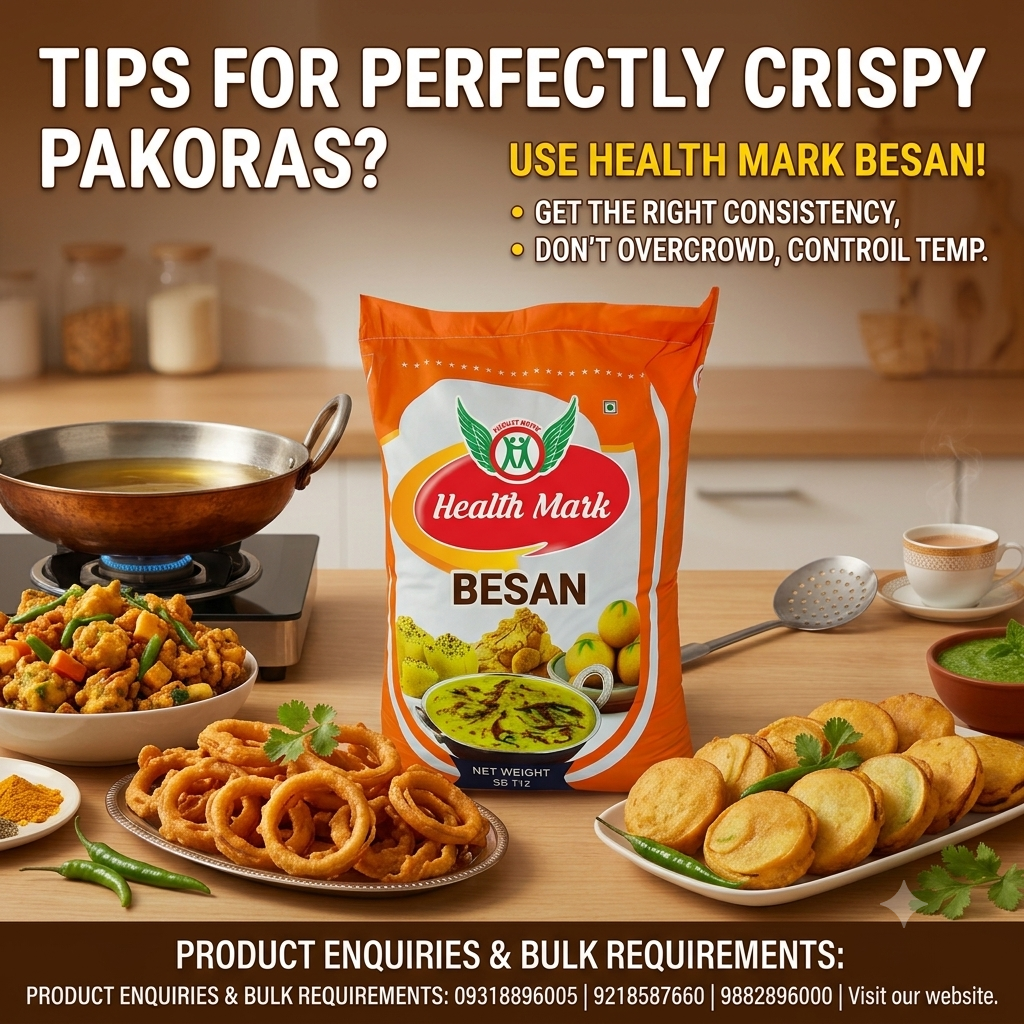
Pakora is a favourite Indian snack that works perfectly with tea, family gatherings, festive occasions, and rainy evenings. Onion pakora, aloo pakora, paneer pakora, spinach pakora and mixed vegetable pakora are all prepared differently, but one ingredient remains central to most recipes: gram flour.
The flour you choose can influence the coating, texture and overall eating experience. However, getting a crispy result is not only about buying a particular product. The quality of the flour, batter consistency, oil temperature and cooking method all work together.
If you want consistently crunchy pakora at home, these practical tips can help you get better results.
Start With Good-Quality Gram Flour
The foundation of good pakora is the flour used for the batter. A finely and consistently ground product generally mixes more easily with water and spices, creating a smooth coating around vegetables or paneer.
When comparing products, look for clean packaging, freshness, consistent texture and clear product information rather than relying only on promotional claims.
People searching for best besan india are often comparing several products, but the better approach is to consider how the flour actually performs in the recipes you prepare regularly.
Check the Freshness Before Using It
Freshness can make a noticeable difference to the flavour and aroma of fried snacks.
Before using the flour, check its packaging and best-before information. If it has been exposed to moisture for a long period, it may develop lumps or lose its original texture.
Once opened, store it in an airtight container in a cool, dry place. Keep it away from steam, water and direct sunlight.
If you are looking for premium quality Besan, freshness and proper storage should be considered along with the flour's texture.
Get the Batter Consistency Right
One of the most common reasons pakora becomes soft instead of crispy is an incorrect batter consistency.
Add water gradually rather than pouring a large quantity into the flour at once. Mix continuously until the batter becomes smooth and thick enough to coat the ingredients evenly.
If the mixture is too thin, it may slide off vegetables while frying. If it is excessively thick, the outer layer can become heavy.
The ideal consistency depends on the ingredient being used. Onion, for example, releases moisture after salt is added, so it may require less water.
Add Spices According to the Recipe
The right spices can improve flavour without making the batter unnecessarily heavy.
Common ingredients include:
-
Salt
-
Red chilli powder
-
Turmeric
-
Ajwain
-
Coriander
-
Green chilli
-
Cumin
You can adjust the combination according to your preferred taste.
Some recipes also use a small amount of rice flour to add additional crunch. This is optional, and the amount should be kept balanced so that the main flavour and texture of the gram flour remain noticeable.
Don't Ignore the Oil Temperature
Even the best Besan will not produce crispy pakora if the oil temperature is incorrect.
Oil that is too cool can cause the coating to absorb more oil, leaving the snack heavy and greasy. Excessively hot oil can brown the outside quickly while the inside remains insufficiently cooked.
A practical way to check the temperature is to drop a small amount of batter into the oil. It should rise steadily rather than immediately becoming dark.
Maintaining a consistent temperature throughout frying is more useful than repeatedly increasing and decreasing the flame.
Avoid Overcrowding the Pan
Adding too many pieces at once can quickly lower the oil temperature.
Instead, fry in smaller batches and leave enough space between individual pieces. This allows the hot oil to circulate properly and helps the coating cook evenly.
Smaller batches may take slightly longer, but they can produce a more consistent texture and colour.
This simple step is particularly important when preparing large quantities for family gatherings or parties.
Prepare Different Pakoras Differently
Not every pakora requires exactly the same batter.
Onion Pakora: Keep the mixture relatively thick because onions naturally release moisture.
Aloo Pakora: Thinly sliced potatoes need enough coating to cover their surface while still allowing the centre to cook.
Paneer Pakora: A smooth batter works well for creating an even coating around each piece.
Palak Pakora: Use a lighter coating so that the spinach remains the main ingredient.
Mixed Vegetable Pakora: Adjust the amount of water depending on the moisture content of the vegetables.
Understanding these small differences can improve the final result more than simply changing brands or adding extra ingredients.
Use the Right Amount of Batter
Too much coating can make pakora feel dense, while too little may leave parts of the ingredient exposed.
Dip the vegetable or paneer piece into the mixture and make sure it is coated evenly. Remove excess batter before carefully placing it into the oil.
A balanced coating allows the outside to become crisp while the ingredient inside retains its natural flavour.
Don't Fry Immediately After Preparing a Very Thin Batter
If the batter becomes watery after sitting for some time, don't immediately add large quantities of flour.
Instead, mix it thoroughly first and check the consistency. If necessary, adjust it gradually.
For best results, prepare the batter close to frying time, particularly when using vegetables that release moisture.
This helps maintain better control over the coating.
Choose Your Supplier Carefully
For households, the product should be fresh, properly packed and suitable for regular cooking. Businesses have additional considerations.
Restaurants, caterers, retailers and snack manufacturers may require bulk Besan, making supply consistency particularly important.
When comparing suppliers, look beyond the best Besan price. Packaging, product consistency, availability, communication and suitability for your application should also be considered.
A reliable Best Besan Seller should be able to provide clear product information and dependable supply rather than competing only on price.
What Makes Premium Quality Besan Worth Considering?
When buying flour, customers often look for premium quality Besan, but the term itself should not be the only deciding factor.
Look at practical qualities such as:
-
Consistent grinding
-
Freshness
-
Proper packaging
-
Clean appearance
-
Suitable texture
-
Clear product information
-
Reliable storage conditions
For commercial users, consistency from one batch to another becomes especially important.
A top Besan supplier should therefore focus on dependable product quality and service rather than simply using promotional terms.
Health Mark Besan for Everyday Indian Cooking
Health Mark offers besan for everyday Indian cooking and different food preparations. It can be used for snacks such as pakora as well as other traditional recipes.
If you are comparing products, consider the recipe you want to prepare, preferred texture, pack size and your regular usage before making a decision.
For households that prepare snacks frequently, choosing a reliable product and storing it correctly can make everyday cooking more convenient.
For more information about Health Mark products, visit the Health Mark website.
Product enquiries and bulk requirements:
09318896005
9218587660
9882896000
Common Mistakes That Can Make Pakora Soft
Even good ingredients can produce disappointing results if a few basic mistakes are made.
Avoid using excessively thin batter, frying at very low temperatures, overcrowding the pan or leaving fried pieces submerged in oil for too long.
After frying, allow the excess oil to drain properly. If you are preparing several batches, avoid covering hot pakora immediately because trapped steam can soften the crispy coating.
Small changes in preparation can have a significant impact on texture.
Final Thoughts
Making crispy pakora is a combination of good ingredients and the right technique. Choosing suitable gram flour, maintaining the right batter consistency, controlling oil temperature and frying in smaller batches can all contribute to a better result.
Rather than focusing only on finding the best Besan, consider freshness, texture, packaging and how well the product suits your preferred recipes.
For regular household cooking or larger food requirements, a dependable supplier can also make sourcing easier. With the right flour and a few simple cooking techniques, you can prepare pakora that is crisp on the outside, well cooked inside and full of flavour.

 English
 Arabic
 Spanish
 Portuguese
 Deutsch
 Turkish
 Dutch
Dutch
 Italiano
 Russian
 Romaian
 Portuguese (Brazil)
 Greek
Greek