


How Difficult Is the CompTIA Network+ Certification Exam?
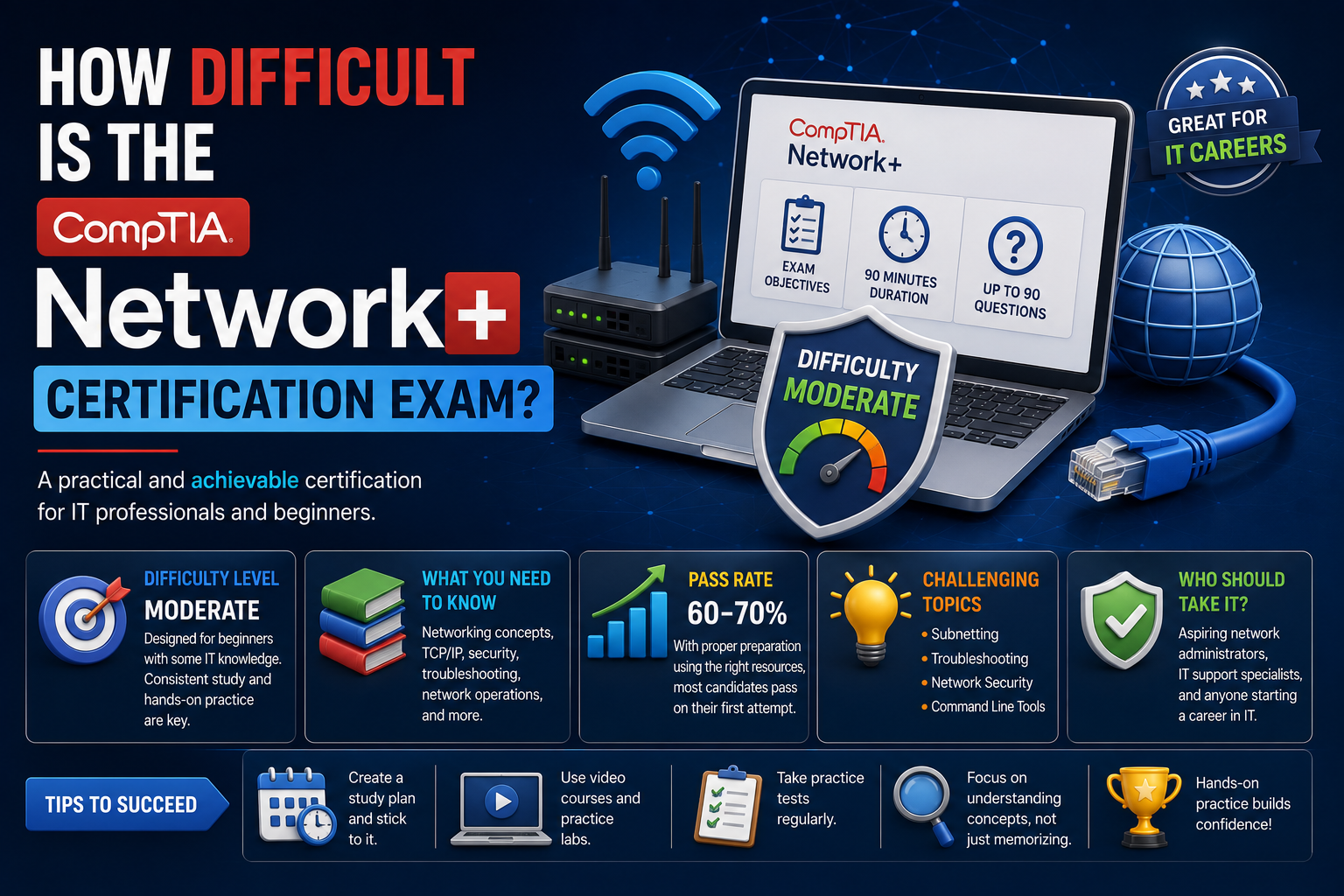
The CompTIA Network+ certification is one of the most popular vendor-neutral networking credentials for IT professionals. It validates the knowledge and practical skills needed to configure, manage, troubleshoot, and secure wired and wireless networks. Because networking forms the foundation of many IT roles, Network+ is often recommended for professionals pursuing careers in technical support, system administration, cloud computing, or cybersecurity.
A common question among candidates is, "How difficult is the CompTIA Network+ exam?" The answer depends largely on your background, hands-on experience, and preparation strategy. While the exam is considered an entry-level networking certification, it still requires a solid understanding of networking concepts and the ability to apply them in practical scenarios.
This guide explains what makes the Network+ exam challenging, the topics you should expect, and how to prepare effectively for success.
Understanding the Network+ Certification
CompTIA Network+ is designed for professionals who install, manage, troubleshoot, and support enterprise networks.
Unlike vendor-specific networking certifications, Network+ teaches universal networking principles that apply across different hardware manufacturers and operating systems.
Candidates are expected to understand how modern networks operate, how devices communicate, and how to diagnose common networking problems.
The certification focuses on practical networking knowledge rather than memorizing commands for a specific vendor.
What Makes the Exam Challenging?
The Network+ exam is not difficult because of advanced mathematics or programming. Instead, its challenge comes from the breadth of networking concepts that candidates must understand.
The exam evaluates practical knowledge across multiple technical areas, requiring candidates to analyze situations instead of recalling isolated facts.
Many questions present real-world troubleshooting scenarios where more than one answer appears reasonable. Selecting the best solution requires understanding how networking technologies interact in practical environments.
Core Topics Covered
The current Network+ exam measures knowledge across several networking domains.
|
Major Topic |
What You Learn |
|
Network Concepts |
Networking fundamentals and communication models |
|
Network Implementation |
Devices, routing, switching, and wireless technologies |
|
Network Operations |
Monitoring, documentation, and management |
|
Network Security |
Network protection and secure connectivity |
|
Network Troubleshooting |
Diagnosing and resolving connectivity issues |
Preparing for every domain is important because the exam draws questions from across the entire syllabus.
Is Network+ Suitable for Beginners?
Yes, but beginners should expect a learning curve.
Although Network+ is considered an entry-level certification, it introduces many technical concepts that may be unfamiliar to candidates without previous networking experience.
Topics such as subnetting, routing, VLANs, wireless standards, DNS, DHCP, VPNs, and network security often require additional study and practical exercises before they become comfortable.
Candidates with some experience in IT support or computer networking generally adapt more quickly.
Common Challenges Candidates Face
Several topics consistently require additional preparation.
These include:
-
IPv4 subnetting
-
Routing concepts
-
Switching technologies
-
Wireless networking
-
Network troubleshooting
-
Security protocols
-
Command-line utilities
-
Performance optimization
Rather than memorizing definitions, candidates should understand how these technologies work together within real networks.
Exam Question Style
One reason candidates find Network+ challenging is the variety of question formats.
The exam may include:
-
Multiple-choice questions
-
Multiple-response questions
-
Performance-based questions
-
Troubleshooting scenarios
Performance-based questions require candidates to apply networking knowledge in simulated environments rather than selecting simple definitions.
Practicing these question styles before exam day significantly improves confidence.
Practical Experience Makes a Difference
Hands-on practice is one of the best ways to prepare.
Candidates should spend time:
-
Configuring small networks
-
Connecting devices
-
Testing connectivity
-
Using networking commands
-
Identifying network problems
-
Reviewing IP addressing
-
Exploring wireless configurations
Even simple home laboratory environments can strengthen understanding far more effectively than reading alone.
Prepare for the CompTIA Network+ certification with updated practice questions: https://certmage.com/exams/comptia/
How to Make the Exam Easier
A structured study plan can reduce the overall difficulty of the certification.
Helpful preparation strategies include:
-
Review the official exam objectives.
-
Study one domain at a time.
-
Practice subnetting regularly.
-
Build small networking labs.
-
Complete realistic practice exams.
-
Review incorrect answers carefully.
-
Revisit weaker topics frequently.
Consistent daily study sessions usually produce better results than occasional intensive revision.
Is Network+ Worth the Effort?
Although the certification requires commitment, many professionals find the knowledge valuable long after passing the exam.
Networking concepts introduced during preparation remain relevant across many technology careers, including cloud computing, cybersecurity, infrastructure management, and systems administration.
Because networking forms the foundation of modern IT environments, these skills continue supporting career growth even as technology evolves.
Conclusion
CompTIA Network+ remains one of the best networking certifications for IT professionals beginning their networking careers. While the exam covers a wide range of topics and includes practical scenario-based questions, its difficulty can be managed through structured preparation, hands-on practice, and regular revision.
By focusing on understanding networking concepts rather than memorizing answers, candidates can significantly improve both their exam performance and their long-term technical skills.
FAQs
Is the CompTIA Network+ exam difficult for beginners?
Network+ introduces many networking concepts, but beginners who study consistently, practice regularly, and build hands-on experience can successfully prepare for the certification examination.
Does Network+ include performance-based questions?
Yes. The certification exam includes performance-based questions that evaluate practical networking knowledge and problem-solving abilities in realistic technical scenarios.
Which topics require the most preparation?
Many candidates spend additional time studying subnetting, routing, switching, wireless networking, troubleshooting, and network security because these areas commonly present greater technical challenges.
Is practical networking experience necessary?
Practical experience is highly beneficial because it reinforces theoretical knowledge and helps candidates solve scenario-based questions more effectively during the certification exam.
How long should I study for Network+?
Preparation time varies according to experience. Candidates with networking knowledge usually require less study time than complete beginners learning networking concepts for the first time.
Read More: Network+ vs Security+ 2026: Which Certification Is Better for Cybersecurity?

 English
 French
 Spanish
 Portuguese
 Deutsch
 Turkish
 Dutch
Dutch
 Italiano
 Russian
 Romaian
 Portuguese (Brazil)
 Greek
Greek