


Industrial RO Plant Manufacturers in India for Water Treatment
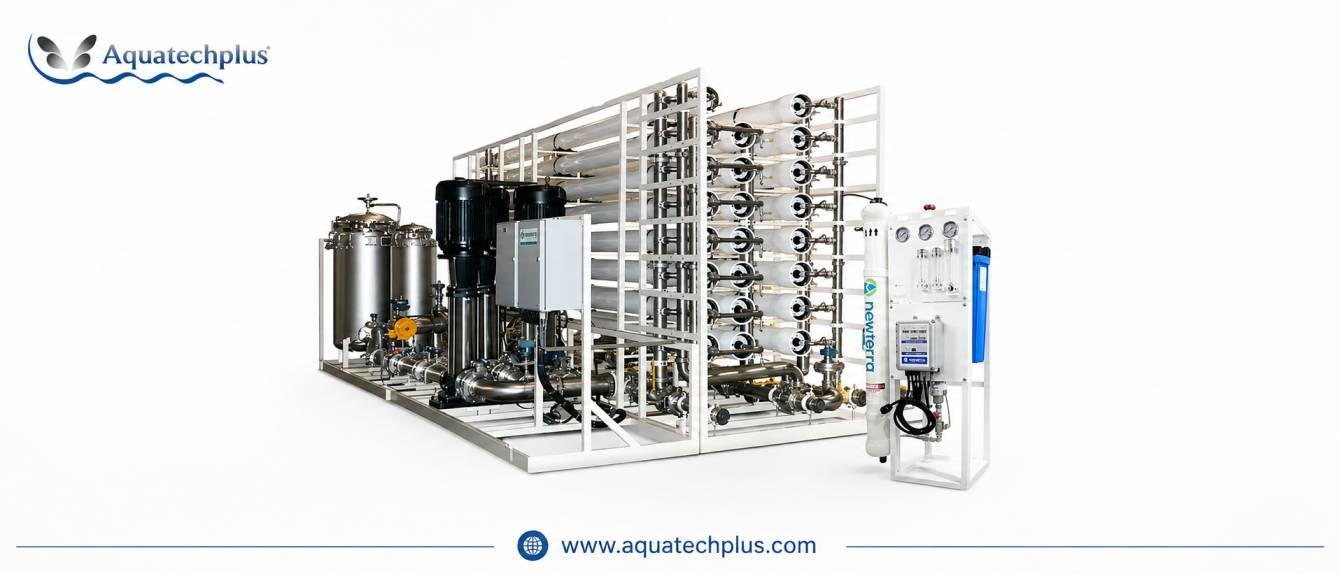
Your production line doesn't care about your water quality — until it does. One scaling issue in a boiler feed, one contaminated batch in a pharma line, and suddenly everyone's asking who approved the water treatment vendor. That's the moment most plant managers start searching for an actual Industrial RO Plant, not a quick fix. India has no shortage of vendors claiming expertise. Few have handled the specific mess of industrial water — hardness, silica, microbial load, and the seasonal variation that municipal water reports never mention.
Specification
-
Capacity Range: 500 LPH to 100,000+ LPH, engineered around your actual shift load, not a catalog number.
-
Membrane Configuration: Thin-film composite membranes, typically 2–4 stage depending on feed water TDS.
-
Pre-Treatment Stack: Multimedia filtration, activated carbon, antiscalant dosing, and cartridge filters — skip any one of these and your membranes fail early. That's the detail most buyers overlook: pre-treatment isn't an optional add-on, it's 60% of system longevity.
-
Automation: PLC-based controls with SCADA integration for plants running 24/7 shifts.
-
Recovery Rate: 65–85%, depending on feed water chemistry.
5 Criteria to Evaluate Any Supplier
-
Do they design around your feed water report, or a generic template? A bad answer sounds like "our standard system handles most water types." It doesn't.
-
Can they show a working installation in your industry? If they can't name one, they're learning on your project.
-
What's their membrane replacement cycle guarantee? Vague answers like "long-lasting" mean no data exists.
-
Do they manufacture in-house or assemble imported components? Assembly shops can't troubleshoot fast.
-
What happens when output drops below spec three months post-installation? A supplier who says "we'll handle it case by case" doesn't have a policy. That's a negotiation you'll lose after commissioning.
Benefits
-
Reduced membrane fouling means fewer unplanned shutdowns — and shutdowns cost more than the system itself.
-
Lower chemical dosing over time, because correctly sized pre-treatment reduces scaling load on the membranes.
-
Consistent permeate quality protects downstream equipment — boilers, chillers, and process lines — from long-term corrosion damage.
-
Energy-efficient pumps cut operational costs, which matters more once you're running three shifts.
-
Compliance-ready output for pharma, food, and beverage sectors where audit failures aren't negotiable.
-
Faster ROI when systems are right-sized instead of oversold — a 20,000 LPH plant sold to a 12,000 LPH operation isn't efficient, it's wasted capital.
Availability
We manufacture and install across India, with active project sites spanning Gujarat's chemical belt, Maharashtra's pharma clusters, and Tamil Nadu's textile hubs. Location affects more than shipping time — it determines which water chemistry challenges your system needs to be engineered against. A Rajasthan feed water profile and a coastal Kerala one demand entirely different pre-treatment logic. That's a supply chain decision, not a paperwork formality.
About Us
We've been building industrial RO Plant water and cooling systems, under our FIDEM brand. We stopped recommending a particular resin type for high-silica feed water back in 2019, after two clients in Gujarat saw premature membrane scaling within four months. We switched our default pre-treatment spec that same year. That's what a decade of field feedback actually looks like — not a claim on a brochure, a correction we made because something broke.
Our engineers design each RO Plant Manufacturers in India project around the client's real feed water report, not a generic industry average.
Choose the Right RO Plant Manufacturer
Send us your feed water analysis and daily capacity requirement — we respond with a technical proposal within 48 hours. Minimum order quantity starts at 500 LPH systems. No feed water report yet? We'll guide you through getting one tested before we quote anything.
Conclusion
Water treatment failures rarely announce themselves early — they show up as membrane replacements, unplanned downtime, or a compliance flag nobody wants to explain. Choosing among Industrial RO Plant manufacturers isn't about the lowest quote; it's about who understands your specific water chemistry before they design anything. The right system pays for itself in avoiding shutdowns alone.
FAQs
1. What's the typical lifespan of an industrial RO membrane?
Three to five years under proper pre-treatment. Skip pre-treatment stages, and you're looking at 12–18 months before performance drops noticeably.
2. How long does installation take for a mid-size plant?
Four to six weeks from design approval to commissioning, depending on site readiness and civil work.
3. Are your systems suitable for pharmaceutical-grade water?
Yes, with additional UV and EDI stages for USP-grade output. Standard industrial RO water purifier system configurations don't meet pharma specs alone.
4. Do you provide AMC support after installation?
Yes, though we'll be honest — first-year AMC costs run higher because membrane behavior data is still being collected on your specific feed water.

 English
 Arabic
 French
 Spanish
 Portuguese
 Turkish
 Dutch
Dutch
 Italiano
 Russian
 Romaian
 Portuguese (Brazil)
 Greek
Greek