A 3-Day Golden Triangle Tour is one of the most popular ways to experience India's most celebrated northern destinations in a short but memorable itinerary. Connecting Delhi, Agra, and Jaipur, this classic journey brings together Mughal monuments, royal palaces, historic forts, colorful markets, traditional cuisine, and the extraordinary cultural diversity of North India. The Ministry of Tourism identifies Delhi, Agra, and Jaipur as the Golden Triangle, with Agra particularly known for the Taj Mahal and Jaipur for its royal heritage.
Three days may sound short for such a famous circuit, but a carefully organized itinerary can cover the essential highlights while keeping the journey practical. Delhi introduces you to the contrast between Old and New Delhi, Agra provides the unforgettable experience of seeing the Taj Mahal, and Jaipur takes you into the world of Rajput forts, palaces, markets, and colorful architecture. The route also works well because Agra is well connected by road and rail, while the three destinations form a natural tourism circuit.
Whether you are visiting India for the first time, traveling with family, planning a romantic holiday, or looking for a compact introduction to India's architectural heritage, this itinerary offers a powerful first taste of the country. The secret is not trying to see absolutely everything. Instead, focus on the landmarks and experiences that tell the story of each destination.
What Is the Golden Triangle Tour?
The Golden Triangle refers to the popular tourist circuit connecting Delhi, Agra, and Jaipur. On a map, these three destinations form a rough triangle, which is where the name comes from. The circuit combines India's national capital, the city associated with the Taj Mahal, and Rajasthan's famous Pink City.
The route is popular because each destination feels remarkably different. Delhi is a huge metropolitan city where Mughal history, colonial architecture, religious landmarks, and modern Indian life overlap. Agra is more closely associated with the Mughal period and monumental architecture. Jaipur introduces a distinctly Rajasthani atmosphere, with hill forts, royal residences, colorful bazaars, and traditional craftsmanship.
That variety is what makes the circuit so appealing. You are not simply visiting three cities with similar attractions. You are moving through different chapters of Indian history and culture.
A three-day itinerary is ideal for travelers who have limited time but still want to experience the highlights of North India. A longer Golden Triangle itinerary gives you more time in each destination, but three days can work surprisingly well when the route is planned efficiently.
The main advantage is convenience. Rather than arranging separate transportation, hotels, sightseeing, and guides for every destination, a structured tour can bring everything together into one journey.
The itinerary also allows you to experience India's most recognizable monument—the Taj Mahal—while adding Delhi and Jaipur. For many international travelers, that combination makes the trip feel much more complete than visiting Agra alone.
A private version is particularly flexible. You can adjust sightseeing according to your interests, choose your preferred vehicle, take photography breaks, and avoid waiting for a large group.
Day 1: Explore Delhi and Travel to Agra
Your first day begins in Delhi, India's capital and the traditional starting point of the Golden Triangle. Depending on your arrival time, you can explore selected highlights of Old and New Delhi before continuing to Agra.
If you have already spent time in Delhi, the first day can focus more heavily on the journey to Agra. If this is your first visit, several major landmarks can be included without making the day unnecessarily complicated.
A practical Delhi sightseeing route may include India Gate, the government district, Humayun's Tomb, and selected Old Delhi attractions. The exact order depends on your hotel location, traffic, opening hours, and departure time.
The goal is to experience Delhi's character while leaving enough time for the onward journey.
Discover Old Delhi
Old Delhi offers a completely different atmosphere from the broad avenues of New Delhi. The historic neighborhood grew around Shahjahanabad, the Mughal capital associated with Emperor Shah Jahan.
The area is known for its historic streets, markets, mosques, food traditions, and monumental architecture. If time permits, the Red Fort and Jama Masjid are natural highlights.
The Red Fort is particularly significant because it was built during Shah Jahan's reign and became a major center of Mughal power. Its red sandstone walls, royal courtyards, audience halls, and palace structures provide a fascinating introduction to the Mughal period.
Nearby Jama Masjid offers another perspective on the same historical period. The mosque's large courtyard, gateways, domes, and minarets make it one of the most recognizable religious landmarks in Old Delhi.
Experience Chandni Chowk
If your schedule allows, spend some time around Chandni Chowk. This historic market district is one of the liveliest parts of Delhi and provides a glimpse into the city's everyday commercial culture.
Traditional shops, food stalls, textiles, spices, sweets, jewelry, and religious businesses fill the narrow lanes. The experience is very different from visiting a monument because you are observing a living neighborhood rather than simply looking at historic architecture.
A cycle-rickshaw ride through selected lanes can be an enjoyable way to experience the market without walking its entire length.
If you are interested in Indian food, this is also an excellent opportunity to sample traditional Delhi specialties, provided you choose food outlets that suit your dietary and hygiene preferences.
See India Gate and New Delhi
If you prefer New Delhi's landmarks, India Gate is one of the easiest highlights to include. The monumental arch is located along the ceremonial heart of the capital and is one of the city's most recognizable symbols.
You can also drive past important government buildings such as Rashtrapati Bhavan and Parliament-related landmarks, subject to current traffic and security restrictions.
This part of Delhi demonstrates the city's dramatic architectural contrast. Old Delhi reflects centuries of Mughal history, while New Delhi's broad avenues and monumental government buildings represent a later chapter in the capital's development.
Visit Humayun's Tomb
If your schedule permits, Humayun's Tomb is another excellent Delhi attraction. The grand Mughal garden tomb combines a monumental central structure with formal gardens, arches, red sandstone, marble details, and a large dome.
Its architectural importance makes it particularly interesting for visitors who plan to see the Taj Mahal later in the journey. The monument demonstrates an earlier stage of Mughal garden-tomb architecture and helps travelers recognize some of the design principles that developed further in later Mughal monuments.
After completing your selected Delhi sightseeing, begin the journey toward Agra.
Travel From Delhi to Agra
The Delhi-to-Agra section is an important part of the Golden Triangle route. Agra is well connected to Delhi by road and rail, and the city's position makes it a natural second stop on the circuit.
A private car provides flexibility because you can travel directly from your Delhi hotel or sightseeing location to your Agra accommodation. Depending on your itinerary, you can arrive in Agra in time for an evening experience.
Do not underestimate the value of keeping the evening relatively relaxed. The first day already involves sightseeing and travel, and the following morning is likely to begin early for the Taj Mahal.
If you arrive with enough time, you can explore a local market or enjoy dinner at your hotel rather than adding another major monument.
Day 2: Discover the Taj Mahal and Agra
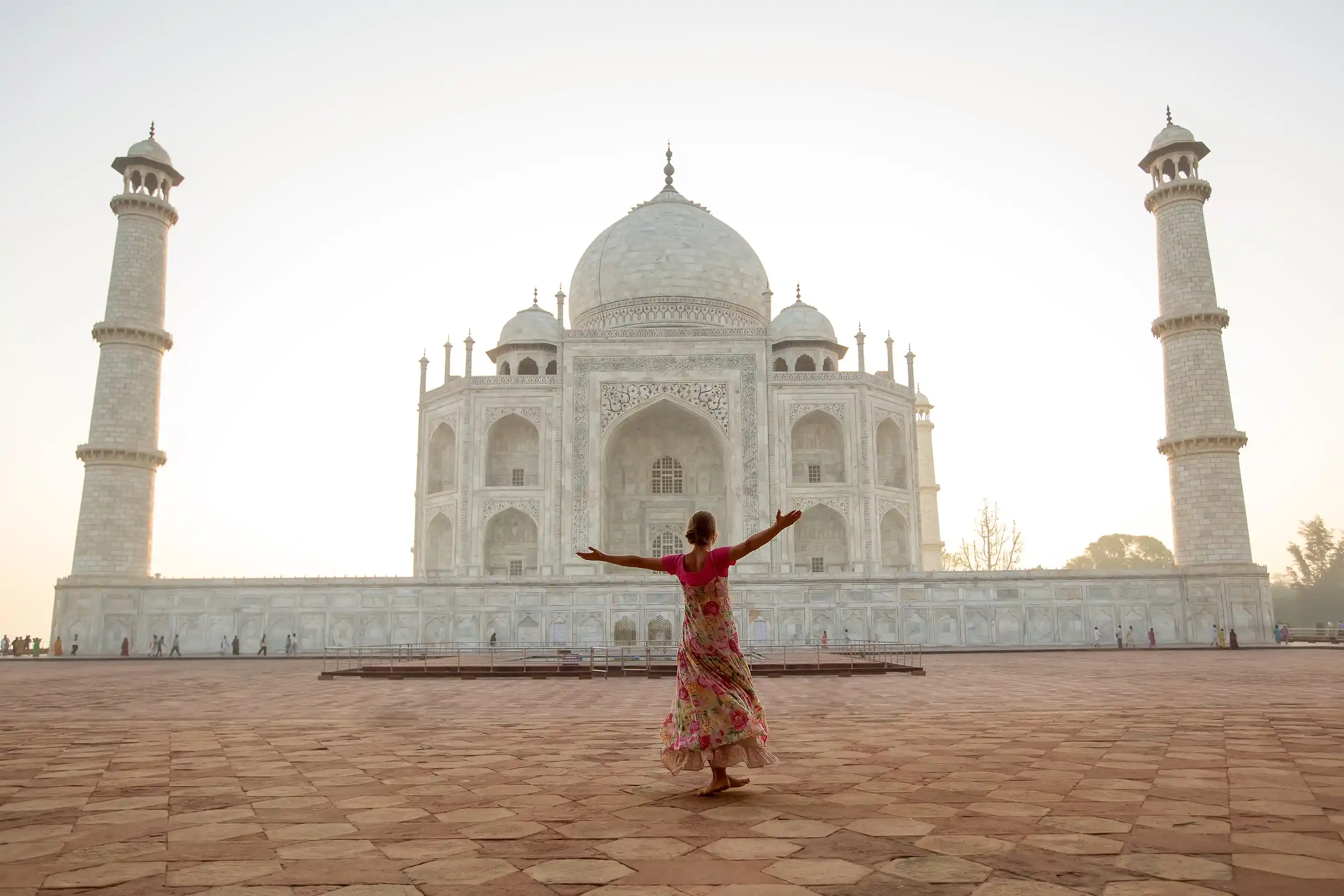
Day two is the emotional center of the 3-Day Golden Triangle Tour because it brings you to Agra and the world-famous Taj Mahal.
The best strategy is to begin early. The Taj Mahal is an outdoor monument, and early morning can provide a more comfortable sightseeing environment than the heat of the afternoon. Exact opening days and visitor rules should always be checked before your visit because monument schedules and access arrangements can change.
The Taj Mahal is not simply a beautiful building. It is a Mughal mausoleum commissioned by Shah Jahan in memory of Mumtaz Mahal, and its architectural composition combines symmetry, gardens, marble craftsmanship, decorative details, and monumental scale.
Standing before it is different from seeing it in photographs. The changing light, reflections, details in the marble, and surrounding garden create an experience that photographs cannot fully reproduce.
Experience the Taj Mahal at Sunrise
A sunrise visit can be one of the most memorable moments of the entire Golden Triangle itinerary.
Arriving early allows you to watch the monument gradually emerge from the softer morning light. The atmosphere can feel calmer than later in the day, although visitor numbers vary by season and date.
Photography enthusiasts particularly enjoy this time because changing light can create subtle differences in the appearance of the white marble.
Allow enough time to walk through the gardens, view the main mausoleum from different angles, and appreciate the decorative details.
Remember that the Taj Mahal is a protected monument, so visitors should follow current security, photography, and visitor regulations.
Explore Agra Fort
After the Taj Mahal, continue to Agra Fort, another major monument associated with the Mughal Empire.
The enormous red sandstone complex served as an important imperial residence and administrative center. Its massive walls and palace interiors demonstrate the power of the Mughal court.
The fort also provides interesting views toward the Taj Mahal from permitted areas. Standing inside Agra Fort and looking toward the Taj creates a powerful connection between two monuments associated with Shah Jahan's reign.
A knowledgeable guide can explain the history of Akbar, Shah Jahan, Aurangzeb, and the changing role of the fort over different periods.
Visit Mehtab Bagh
Depending on your schedule, Mehtab Bagh can be added as an optional stop. Located across the Yamuna River from the Taj Mahal, the garden is known for its views toward the monument.
It can be especially attractive for travelers interested in photography or gardens. However, because a three-day itinerary has limited time, it should be considered optional rather than essential.
If your priority is seeing the major monuments, spend more time inside the Taj Mahal and Agra Fort.
Explore Agra's Local Crafts
Agra has a long tradition of handicrafts and marble-related decorative work. Travelers interested in souvenirs can explore local craft shops offering marble inlay, textiles, leather products, decorative items, and other goods.
Shopping should be approached carefully. Ask about prices, materials, craftsmanship, and return policies before making expensive purchases.
A private guide can help you understand what you are buying and distinguish between traditional craftsmanship and mass-produced souvenirs.
Do not allow shopping to dominate the itinerary unless it is one of your main interests.
Travel From Agra to Jaipur
After exploring Agra, the journey continues toward Jaipur, the capital of Rajasthan.
This is where the Golden Triangle starts to feel particularly diverse. The architecture and cultural atmosphere gradually shift from Mughal-era Agra toward the Rajput heritage of Rajasthan.
Depending on the itinerary and timing, you may be able to stop at Fatehpur Sikri, the historic Mughal city located near Agra. The Ministry of Tourism identifies Fatehpur Sikri as an important attraction in the Agra region.
If you include Fatehpur Sikri, remember that the stop adds sightseeing time to an already busy travel day. It is best included when the schedule allows it without creating unnecessary pressure.
Once you reach Jaipur, check into your hotel and enjoy a relaxed evening.
Day 3: Explore the Royal Heritage of Jaipur
Your final day focuses on Jaipur, famously known as the Pink City. Rajasthan's capital provides a dramatic change from the Mughal atmosphere of Agra.
Jaipur was founded in the 18th century by Maharaja Sawai Jai Singh II and developed as a planned city. Its historic architecture, royal complexes, markets, and distinctive streets create a strong visual identity.
A well-organized sightseeing route can include Amber Fort, Jal Mahal, City Palace, Jantar Mantar, and Hawa Mahal.
Because you are traveling on the third day, prioritize the attractions that interest you most rather than trying to see every corner of the city.
Explore Amber Fort
Amber Fort is usually the first major Jaipur attraction on a Golden Triangle itinerary.
Located on a hill outside the central city, the fort combines Rajput and Mughal architectural influences. Its gateways, courtyards, palace halls, gardens, and decorative interiors reveal the wealth and sophistication of Jaipur's former royal court.
The Sheesh Mahal, or Mirror Palace, is particularly famous for its intricate decorative work.
The fort is large, so allow enough time to walk through the major sections. Comfortable shoes are essential because the visit involves walking across different surfaces and potentially climbing stairs.
Stop at Jal Mahal
On the way back toward central Jaipur, stop at Jal Mahal, the palace situated in Man Sagar Lake.
The building's relationship with the surrounding water creates one of Jaipur's most distinctive landscapes. The palace is particularly photogenic from the lakeside viewpoint.
The exact visitor access arrangement can vary, so do not assume that viewing the palace from the shore means you can enter the structure.
A short stop is usually enough to appreciate the view and take photographs before continuing.
Visit City Palace
Continue to City Palace, one of Jaipur's most important royal complexes.
The palace contains courtyards, decorative gateways, museums, gardens, and royal residences. Its architecture reflects a combination of Rajput, Mughal, and other influences.
For travelers interested in royal history, this is one of the most rewarding stops in Jaipur because it provides a closer look at courtly life, artistic traditions, ceremonial spaces, and royal collections.
A guide can help explain the purpose of the different sections and connect the architecture with Jaipur's history.
Discover Jantar Mantar
Next, explore Jantar Mantar, the historic astronomical observatory created under Sawai Jai Singh II.
The enormous instruments can initially look like abstract sculptures, but each had a practical astronomical purpose. They were designed for observations and calculations involving celestial positions and time.
This attraction adds an unusual dimension to the Golden Triangle because it demonstrates that Jaipur's history is not limited to palaces and warfare. Science, mathematics, urban planning, and astronomy were also important parts of the city's intellectual culture.
A guided visit makes the observatory much easier to understand.
See Hawa Mahal
Finish your Jaipur sightseeing with Hawa Mahal, perhaps the city's most recognizable architectural facade.
The honeycomb-like exterior contains numerous windows and openings and was designed to allow royal women to observe street life while maintaining privacy.
The building is particularly impressive from the street opposite the facade. A short photography stop can therefore work well even on a busy itinerary.
If you have additional time, explore the nearby markets and old city streets before beginning your onward journey.
Enjoy Jaipur's Colorful Markets
Jaipur is famous for handicrafts, textiles, jewelry, block-printed fabrics, blue pottery, leather goods, and traditional decorative items.
The markets offer an opportunity to take home something connected with Rajasthan rather than simply buying generic souvenirs.
If shopping is important to you, tell your guide at the beginning of the day so the itinerary can allow sufficient time.
Bargaining practices vary, so do not assume that every shop operates in the same way. Compare products and prices before making significant purchases.
Taste Traditional Rajasthani Cuisine
Food adds another dimension to the Golden Triangle experience. Jaipur is an excellent place to try traditional Rajasthani dishes.
A Rajasthani thali can introduce you to several flavors in one meal, including lentils, vegetables, breads, rice, sweets, and regional specialties.
If you prefer milder food, vegetarian cuisine, or have dietary restrictions, communicate this clearly when ordering.
A good lunch should provide a comfortable break rather than consume so much time that it forces you to rush through the final sightseeing stops.
Why Choose a Private 3-Day Golden Triangle Tour?
A private tour provides flexibility that can be especially valuable on a three-day schedule.
You can start early, change the pace, spend longer at your favorite monuments, stop for photographs, and adjust the itinerary when traffic or weather affects the original plan.
A private driver also eliminates the need to arrange separate transportation between Delhi, Agra, and Jaipur.
For international travelers, this can make the experience much easier because you can focus on the destination rather than constantly working out logistics.
Families benefit from being able to take breaks when necessary, while couples can create a more personal itinerary.
Suggested 3-Day Golden Triangle Itinerary
| Day |
Destination |
Major Highlights |
| Day 1 |
Delhi → Agra |
Old Delhi, Red Fort, Jama Masjid, India Gate, Humayun's Tomb, travel to Agra |
| Day 2 |
Agra → Jaipur |
Taj Mahal, Agra Fort, optional Fatehpur Sikri, travel to Jaipur |
| Day 3 |
Jaipur |
Amber Fort, Jal Mahal, City Palace, Jantar Mantar, Hawa Mahal, markets |
This itinerary is intentionally focused on major highlights. Depending on your arrival time, departure plans, monument schedules, and personal interests, some attractions can be removed or substituted.
What Is Usually Included?
Tour packages differ, but a private three-day Golden Triangle package commonly includes accommodation, private transportation, driver services, hotel transfers, and sightseeing according to the selected itinerary.
Private guides may be included or offered as an optional service. Monument entrance tickets and meals can also be included or excluded depending on the package.
Always request a detailed list of inclusions before booking.
| Tour Feature |
Typical Arrangement |
| Private vehicle |
Usually included |
| Driver |
Usually included |
| Delhi pickup |
Usually included |
| Agra hotel |
Package-dependent |
| Jaipur hotel |
Package-dependent |
| Private guides |
Often included or optional |
| Monument tickets |
Package-dependent |
| Meals |
Package-dependent |
| Shopping |
Personal expense |
The cheapest package is not always the best value. Compare the complete list of services rather than looking only at the headline price.
Is Three Days Enough for the Golden Triangle?
Three days are enough for a highlights-focused introduction, but they are not enough to explore every attraction in depth.
If you want a relaxed experience, a four- or five-day itinerary is preferable. More time allows you to explore additional monuments, spend longer in local markets, enjoy more meals, and reduce the amount of daily travel.
However, if your India trip is packed with destinations and you have only three days available, the shorter itinerary can be very effective.
Think of it as a trailer rather than the entire movie: you get the most important scenes and enough cultural context to understand why you may want to return.
Best Time for a Golden Triangle Tour
The cooler months are generally more comfortable for sightseeing across Delhi, Agra, and Jaipur. Outdoor monuments such as the Taj Mahal, Amber Fort, and Qutub Minar can be demanding during extreme heat.
Summer can still be manageable with early starts, hydration, and appropriate clothing, but afternoon sightseeing may become uncomfortable.
The monsoon period brings humidity and rain, which can affect outdoor plans but may also produce greener landscapes.
Regardless of the season, check the current weather forecast and attraction schedules shortly before traveling.
What Should You Pack?
Comfortable walking shoes are essential because the itinerary involves several large monuments.
Carry lightweight clothing appropriate for the season, sunscreen, sunglasses, a hat, water, and a small day bag.
Modest clothing is useful when visiting religious sites.
Keep your luggage organized because you will be moving between multiple hotels and destinations in only three days.
If you plan to shop for handicrafts, leave some extra space in your luggage.
Is the Tour Suitable for Families?
Yes, but families should understand that this is an active itinerary.
Children may enjoy the forts, palaces, markets, and colorful architecture, but the long road journeys can become tiring.
A private vehicle makes family travel considerably easier because you can stop for refreshments, adjust the sightseeing pace, and allow children to rest during transfers.
Avoid adding too many optional attractions. The major highlights already provide plenty of stimulation for younger travelers.
Is the Golden Triangle Good for Couples?
Absolutely. The Golden Triangle combines dramatic architecture, historic cities, cultural experiences, photography opportunities, and memorable meals.
The Taj Mahal naturally provides one of the most iconic moments of the trip, while Jaipur's palaces and forts offer a different kind of romantic atmosphere.
A private tour also gives couples greater control over their schedule and allows them to enjoy the journey without being tied to a large group.
Common Mistakes to Avoid
The first mistake is trying to see everything. A three-day Golden Triangle itinerary needs priorities.
The second is starting too late. Early mornings are valuable because they provide additional sightseeing time and can help avoid some of the day's heat.
Another mistake is ignoring travel time. Delhi, Agra, and Jaipur are connected by major routes, but road conditions and traffic can affect the schedule.
You should also confirm monument opening days and current visitor rules before departure. The Archaeological Survey of India notes that protected monuments operate according to their designated visiting hours, with rules varying by monument.
Finally, do not spend so much time shopping that you have to rush through the major historical attractions.
Why the Golden Triangle Is Worth Experiencing
The appeal of the Golden Triangle is its variety.
Delhi gives you layers of history and the energy of a modern capital. Agra introduces you to the grandeur of Mughal architecture through the Taj Mahal and Agra Fort. Jaipur takes you into Rajasthan's royal world of hill forts, palaces, colorful markets, and distinctive traditions.
The route also offers a useful introduction to the geographic and cultural diversity of northern India. Within only a few days, the architecture, food, landscapes, and atmosphere change noticeably.
That is why the circuit remains such a popular starting point for travelers discovering India.
Conclusion
A 3-Day Golden Triangle Tour is one of the most efficient ways to experience India's most famous northern tourist circuit. From the historic streets and monumental architecture of Delhi to the timeless beauty of the Taj Mahal in Agra and the royal heritage of Jaipur, the itinerary brings together three very different destinations in one compact journey.
The key to enjoying the trip is realistic planning. Start early, prioritize the major attractions, leave reasonable time for travel, and avoid filling every minute with additional sightseeing. A private car and knowledgeable guides can make the experience significantly more comfortable and flexible.
Day one introduces you to Delhi's historic and modern sides before taking you to Agra. Day two centers around the Taj Mahal and Agra Fort before continuing toward Jaipur. Day three explores Amber Fort, Jal Mahal, City Palace, Jantar Mantar, Hawa Mahal, and the colorful markets of the Pink City.
Three days will not reveal every secret of Delhi, Agra, and Jaipur, but they can provide a remarkable first introduction to India's history, architecture, food, and culture. For travelers with limited vacation time, the 3-Day Golden Triangle Tour offers an itinerary packed with unforgettable experiences without requiring a long commitment.
FAQs
1. What cities are included in the 3-Day Golden Triangle Tour?
The classic circuit includes Delhi, Agra, and Jaipur. Delhi is generally the starting point, Agra is the second destination, and Jaipur is the final major stop.
2. Can I see the Taj Mahal on a three-day Golden Triangle tour?
Yes. The Taj Mahal is normally the central highlight of the Agra portion of the itinerary. An early morning visit is often preferred because it provides more sightseeing time afterward and can offer pleasant light for photography.
3. Is a private car recommended for a 3-day Golden Triangle tour?
A private car is highly recommended for travelers who value flexibility and convenience. It allows direct transfers between destinations and makes it easier to adjust the itinerary around traffic, weather, meal breaks, and personal interests.
4. Can I customize the Golden Triangle itinerary?
Yes. A private itinerary can generally be customized. You can add or remove attractions, spend more time at particular monuments, include shopping or food experiences, or adjust the sightseeing pace according to your preferences.
5. Is three days enough for Delhi, Agra, and Jaipur?
Three days are enough for the major highlights, but not for a slow, comprehensive exploration of all three cities. If you prefer a relaxed pace and want to explore additional attractions, a four- or five-day Golden Triangle itinerary would be more suitable.




 English
 Arabic
 French
 Spanish
 Portuguese
 Deutsch
 Turkish
 Dutch
Dutch
 Italiano
 Romaian
 Portuguese (Brazil)
 Greek
Greek